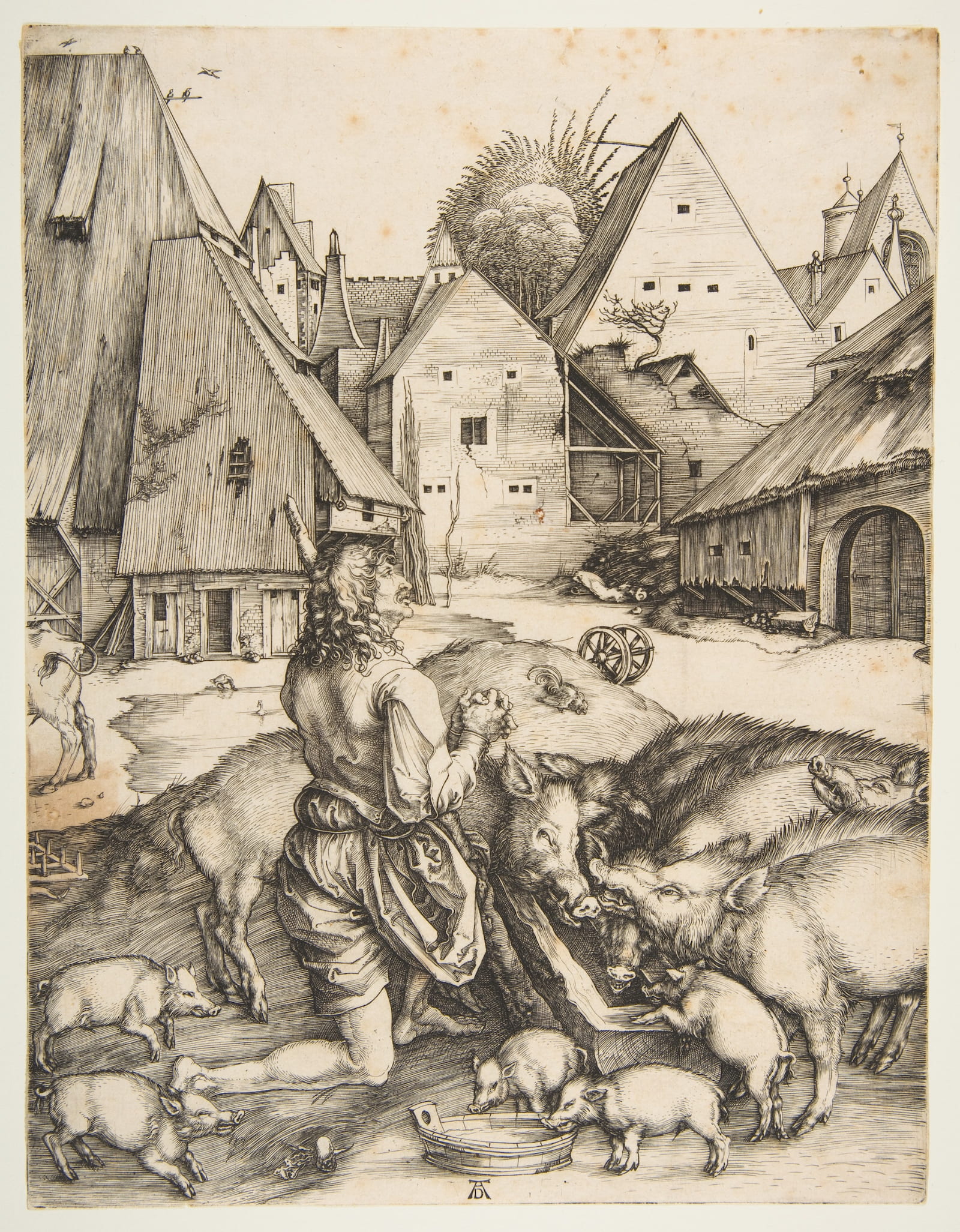
Gospel of the Sunday (Luke 15: 11–32)
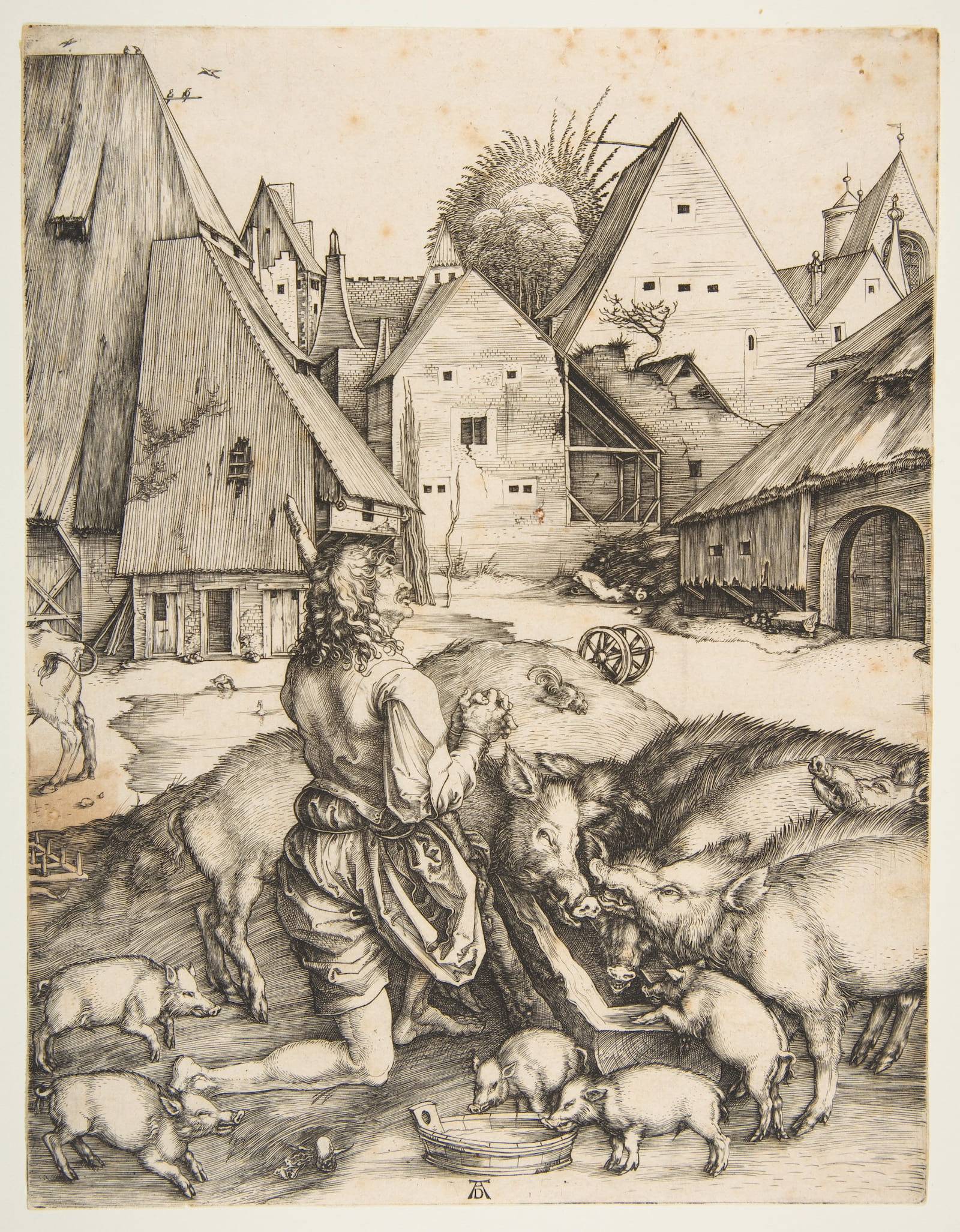
At that time Jesus spoke this parable: A certain man had two sons. And the younger of them said to his father: Father, give me the portion of substance that falleth to me. And he divided unto them his substance. And not many days after, the younger son, gathering all together, went abroad into a far country: and there wasted his substance, living riotously. And after he had spent all, there came a mighty famine in that country; and he began to be in want. And he went and cleaved to one of the citizens of that country. And he sent him into his farm to feed swine. And he would fain have filled his belly with the husks the swine did eat: and no man gave unto him. And returning to himself he said: How many hired servants in my father’s house abound with bread, and I here perish with hunger! I will arise and will go to my father, and say to him: Father, I have sinned against heaven and before thee; I am not now worthy to be called thy son: make me as one of thy hired servants.
And rising up he came to his father. And when he was yet a great way off, his father saw him, and was moved with compassion, and running to him fell upon his neck, and kissed him. And the son said to him: Father, I have sinned against heaven and before thee; I am not worthy to be called thy son. But the father said to his servants: Bring forth quickly the first robe, and put it on him, and put a ring on his hand, and shoes on his feet: and bring hither the fatted calf, and kill it, and let us eat and make merry: because this my son was dead, and is come to life again; he was lost, and is found. And they began to be merry. Now his elder son was in the field: and when he came and drew nigh to the house, he heard music and dancing. And he called one of the servants, and asked what these things meant. And he said to him: Thy brother is come, and thy father hath killed the fatted calf, because he hath received him safe and sound. And he was angry, and would not go in. His father therefore coming out began to entreat him. And he answering said to his father: Behold, for so many years do I serve thee, and I have never transgressed thy commandment; and yet thou hast never given me a kid to make merry with my friends. But as soon as this thy son is come, who hath devoured his substance with harlots, thou hast killed for him the fatted calf. But he said to him: Son, thou art always with me, and all I have is thine. But it was fit that we should make merry and be glad, for this thy brother was dead, and is come to life again; he was lost, and is found.
From a sermon of Saint Bernard of Clairvaux.
Rise, thou that sleepest, and arise from the dead, and Christ shall give thee light. This word of the Apostle calls us to conversion. For what is it to rise if not to be converted? Whoever lives in sin lies, as it were, upon the earth. He has fallen by his own will, and he remains lying there until he chooses to rise. Rise therefore, O man; rise from the earth; rise from the dust; rise from thy fall. Return to thy heart, and within thy heart thou shalt find God, whom thou didst seek outside thyself and whom thou hast lost through sin.
Why dost thou remain so long lying there? Why dost thou love the dust into which thou hast fallen? Man was created for higher things, and yet he prefers the low. He leaves the house of his Father and goes into a far country. That country is the world in which one lives without God. There the inheritance that was received is squandered; there the riches of grace are lost; there the soul becomes poor.
For what is the inheritance of man? It is that he is created in the image of God, that he possesses reason to know the truth and a will to love the good. But when he misuses these gifts and abandons himself to sin, he wastes his inheritance like the prodigal son. At first he seems rich, but soon famine follows. For where God is not, there can be no true abundance.
Thus poverty comes upon the soul. It seeks food among the swine, that is, among the unclean desires of the world. It imagines that it will find satisfaction there, yet it remains hungry. For no earthly joy can fill the emptiness of a heart created for God.
Blessed however is the man who at last comes to himself. For as long as he lives outside himself, in distraction and desire, he cannot find God. But when he returns to his heart, he also begins to return to God. Then he says: I will arise and go to my father.
See now how great is the mercy of the Father. He does not wait coldly until the son arrives. He sees him already from afar. Before the sinner reaches the threshold, God’s mercy is already moved. The Father runs to meet him, falls upon his neck and kisses him. Thus God receives the soul that returns to Him.
He does not reproach her sins, He does not hold her faults before her eyes, but He restores her to her dignity. The first robe is placed upon her, for the grace that was lost is restored. The ring is given as a sign of fidelity, for God renews His covenant with the soul that returns to Him.
Therefore, brethren, let us not hesitate to return. The Father is good, the Father is merciful, the Father is patient. He does not wish that the sinner should perish but that he should be converted and live. The longer you delay, the longer you remain in poverty; but as soon as you arise and return, you will find peace again.
Let us therefore rise from sin, rise from negligence, rise from the sleep of the soul. Let us return to the house of the Father, where true life is, where peace is, where the joy is that never passes away.