Gospel of the Sunday (John 8:46–59)
Which of you shall convince me of sin? If I say the truth to you, why do you not believe me? He that is of God heareth the words of God. Therefore you hear them not, because you are not of God. The Jews therefore answered, and said to him: Do not we say well that thou art a Samaritan, and hast a devil? Jesus answered: I have not a devil, but I honour my Father, and you have dishonoured me. But I seek not my own glory: there is one that seeketh and judgeth. Amen, amen I say to you: If any man keep my word, he shall not see death for ever. The Jews therefore said: Now we know that thou hast a devil. Abraham is dead, and the prophets, and thou sayest: If any man keep my word, he shall not taste death for ever. Art thou greater than our father Abraham, who is dead? And the prophets are dead. Whom dost thou make thyself? Jesus answered: If I glorify myself, my glory is nothing. It is my Father that glorifieth me, of whom you say that he is your God. And you have not known him, but I know him. And if I shall say that I know him not, I shall be like to you, a liar. But I do know him, and do keep his word. Abraham your father rejoiced that he might see my day: he saw it, and was glad. The Jews therefore said to him: Thou art not yet fifty years old, and hast thou seen Abraham? Jesus said to them: Amen, amen I say to you, before Abraham was made, I am. They took up stones therefore to cast at him. But Jesus hid himself, and went out of the temple.
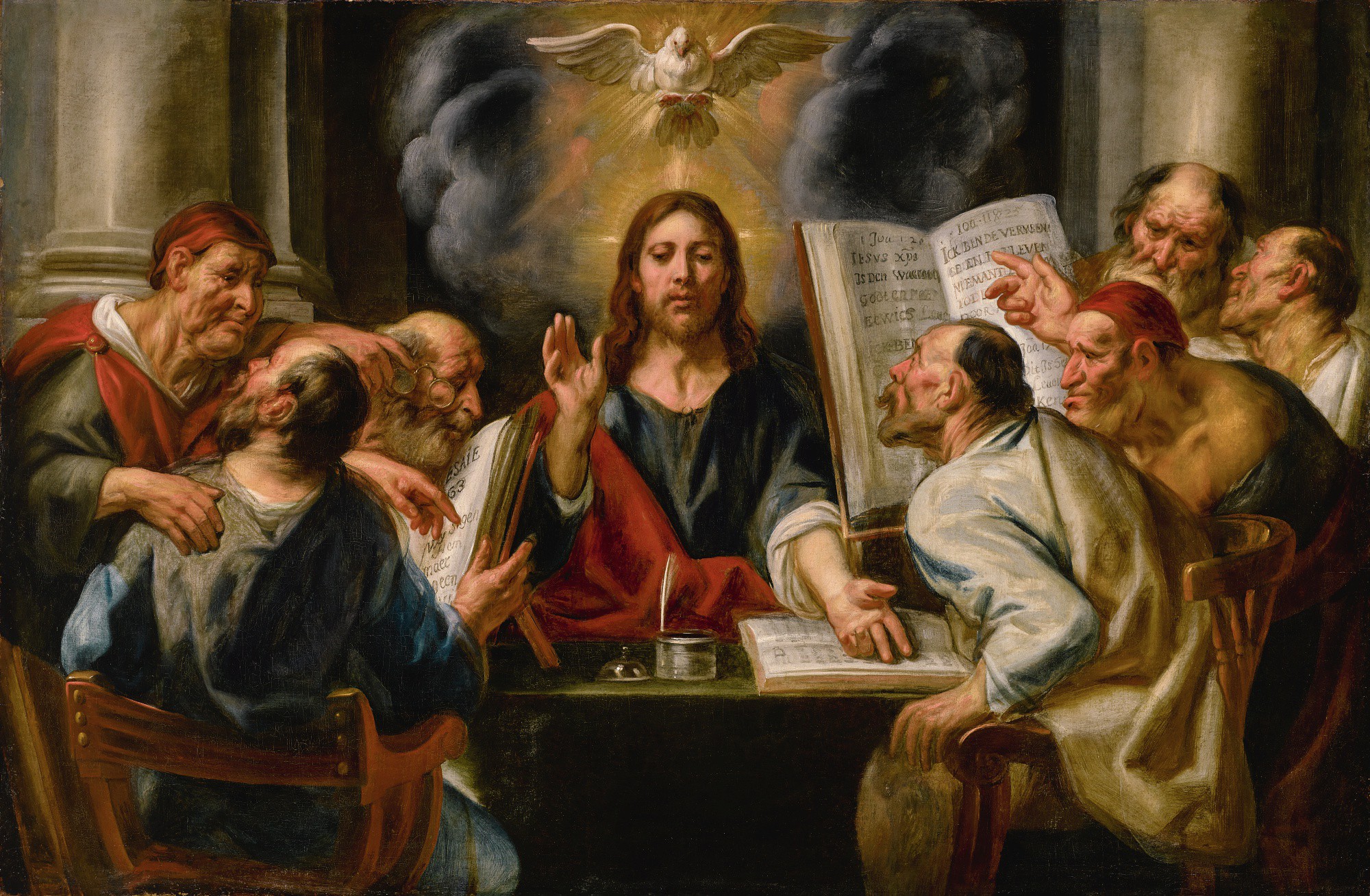
Dom Prosper Guéranger, The Liturgical Year
The great Benedictine Dom Prosper Guéranger describes in his celebrated work The Liturgical Year the transition to Passiontide with remarkable depth. The Church, he writes, is now wholly occupied with the approaching sufferings of the Lord. The crosses are veiled, the tone of the liturgy becomes more grave, and the Gospel shows Christ withdrawing from his enemies. In these pages Guéranger unites the liturgical signs of the Church with the mystery of Christ’s humiliation and the conversion of the soul. His words form a striking meditation for this Sunday.
During the preceding four weeks, we have noticed how the malice of Jesus’ enemies has been gradually increasing. His very presence irritates them; and it is evident, that any little circumstance will suffice to bring the deep and long nurtured hatred to a head. The kind and gentle manners of Jesus are drawing to him all hearts that are simple and upright; at the same time, the humble life he leads, and the stern purity of his doctrines, are perpetual sources of vexation and anger, both to the proud Jew that looks forward to the Messias being a mighty conqueror, and to the Pharisee, who corrupts the Law of God, that he may make it the instrument of his own base passions. Still, Jesus goes on working miracles; his discourses are more than ever energetic; his prophecies foretell the fall of Jerusalem, and such a destruction of its famous Temple, that not a stone is to be left on stone. The doctors of the Law should, at least, reflect upon what they hear; they should examine these wonderful works, which render such strong testimony in favour of the Son of David, and they should consult those divine prophecies which, up to the present time, have been so literally fulfilled in his person. Alas! they themselves are about to carry them out to the very last iota. There is not a single outrage or suffering foretold by David and Isaias, as having to be put upon the Messias, which these blind men are not scheming to verify. In them, therefore, was fulfilled that terrible saying: He that shall speak against the Holy Ghost, it shall not be forgiven him, neither in this world, nor in the world to come. The Synagogue is nigh to a curse. Obstinate in her error, she refuses to see or to hear; she has deliberately perverted her judgment; she has extinguished within herself the light of the Holy Spirit; she will go deeper and deeper into evil, and at length fall into the abyss. This same lamentable conduct is but too often witnessed now-a-days, in those sinners, who, by habitual resistance to the light, end by finding their happiness in sin. Neither should it surprise us, that we find in people of our own generation a resemblance to the murderers of our Jesus: the history of his Passion will reveal to us many sad secrets of the human heart and its perverse inclinations; for what happened in Jerusalem, happens also in every sinner’s heart. His heart, according to the saying of St. Paul, is a Calvary, where Jesus is crucified. There is the same ingratitude, the same blindness, the same wild madness, with this difference, — that the sinner who is enlightened by faith, knows Him whom he crucifies; whereas the Jews, as the same Apostle tells us, knew not the Lord of Glory. Let us weep over the sufferings of our Victim, for our sins caused him to suffer and die. Everything around us urges us to mourn. The images of the Saints, the very crucifix on our Altar, are veiled from our sight. The Church is oppressed with grief. During the first four weeks of Lent, she compassionated her Jesus fasting in the desert; his coming Sufferings and Crucifixion and Death are what now fill her with anguish. We read in to-day’s Gospel, that the Jews threaten to stone the Son of God as a blasphemer: but his hour is not yet come. He is obliged to flee and hide himself. It is to express this deep humiliation, that the Church veils the Cross. A God hiding himself, that he may evade the anger of men, — what a mystery! Is it weakness? Is it, that he fears death? No, — we shall soon see him going out to meet his enemies; but, at present, he hides himself from them, because all that had been prophesied regarding him has not been fulfilled. Besides, his death is not to be by stoning; he is to die upon a Cross, the tree of malediction, which, from that time forward, is to be the Tree of Life. Let us humble ourselves, as we see the Creator of heaven and earth thus obliged to hide himself from men, who are bent on his destruction! Let us go back, in thought, to the sad day of the first sin, when Adam and Eve hid themselves because a guilty conscience told them they were naked. Jesus is come to assure us of our being pardoned; and lo! he hides himself, not because he is naked, — He that is to the Saints the garb of holiness and immortality, — but because he made himself weak, that he might make us strong. Our First Parents sought to hide themselves from the sight of God; Jesus hides himself from the eye of men; but it will not be thus for ever. The day will come, when sinners, from whose anger he now flees, will pray to the mountains that they fall on them to shield them from his gaze; but their prayer will not be granted, and they shall see the Son of man coming in the clouds of heaven, with much power and majesty. This Sunday is called Passion Sunday, because the Church begins, on this day, to make the Sufferings of our Redeemer her chief thought. It is called also, Judica, from the first word of the Introit of the Mass; and again, Neomenia, that is, the Sunday of the new (or, the Easter) moon, because it always falls after the new moon which regulates the Feast of Easter Day. In the Greek Church, this Sunday goes under the simple name of the Fifth Sunday of the Holy Fasts.