Saint Agnes of Rome
Patroness of our church
The glorious virgin who received the crown of martyrdom at the age of thirteen and through the centuries has been invoked as one of the most beloved saints of the Church.
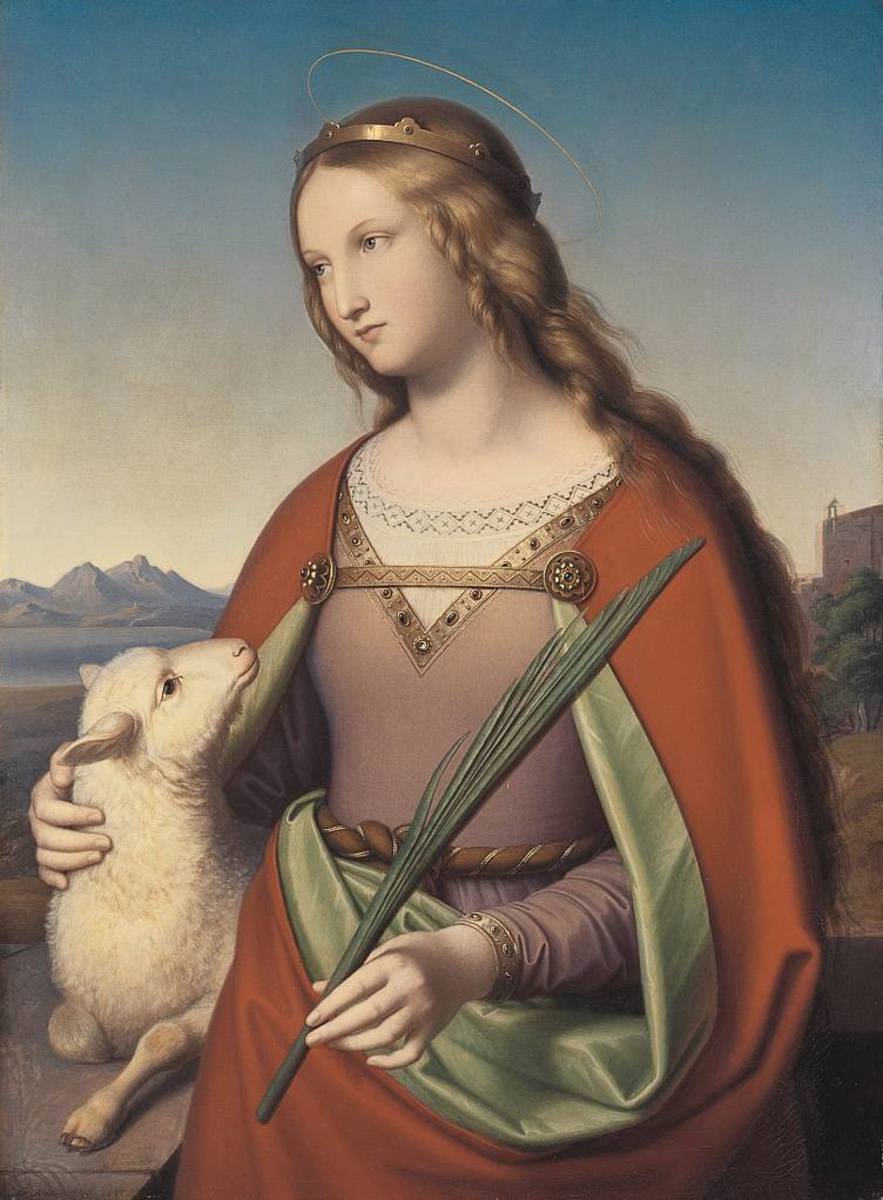
Noble background in times of persecution
Saint Agnes was born into one of the foremost patrician families of imperial Rome at the end of the third century. She possessed wealth, rank and beauty, but she rejected all of this for her heavenly Bridegroom, Jesus Christ, for whose sake she underwent martyrdom when she was thirteen years old. It was the time of the great persecutions of Christians in the Roman Empire. Saint Agnes is one of the youngest, earliest and most venerated saints in the Church’s tradition.
Saint Augustine saw in her name a mystery of salvation: in Greek Agnes means “pure”, in Latin it recalls the “agnus”, the lamb — reflections both of Agnes’ spotless virginity and of the Lamb of God whom she courageously followed through her martyrdom.
Her beauty and noble birth attracted the attention of a young man, Procopius, the son of the influential prefect Symphronius. He tried to win her with riches and promises, but Agnes refused his advances and declared that she already belonged to Christ, her heavenly Bridegroom: I have received milk and honey from His mouth.
This phrase is an example of the so-called Disciplina Arcani which existed in the early Church: a veiled reference to Holy Communion. In a world in which Christians were persecuted, it was prudent not to speak openly about the mysteries of the faith.
Once her faith had become known, she was handed over to the power of the mighty prefect Symphronius. He set before her the choice either to offer sacrifice with the Vestal virgins to the pagan gods of the Romans — it was considered a great honour to be admitted to their ranks — or to be sent to a brothel. She refused the “honour” and was stripped in order to be led to the brothel. Then the first miracle took place: her hair grew and covered her body, hiding it from sight.
Miracles in the brothel
When Agnes entered the brothel, she found there already the angel of God, who surrounded her with a radiant light. A white garment lay ready, which she put on.
Procopius, the son of the prefect, burst in in fury. Immediately the devil seized him by the throat and strangled him so that he fell dead to the ground. At the prayer of Agnes an angel restored him to life, and he confessed: The God of the Christians is truly God; the idols we worship are vain and powerless!
The final trial
This miracle should have settled the matter, but instead the pagan priests and the people demanded the death of the “sorceress”. Symphronius did not dare to set her free, fearing banishment and the confiscation of his goods, so he appointed a substitute — Aspasius, his vicarius — to satisfy the crowd.
Aspasius had a great fire kindled and cast Agnes into it. But the flames parted, and Agnes remained unharmed. Saint Ambrose would later write that she was preserved in the fire no less from the flames than she had previously been preserved from the loss of her virginity.
She was then put to death by the sword (jugulatio), an image of the sacrifice of the Lamb of God. Thus Agnes received the crown of martyrdom and died as virgin and martyr. Saint Ambrose wrote: Saint Agnes went more joyfully to her death than others go to their wedding.
Medical and anatomical examination of her skull confirmed that it belonged to a young woman of no more than thirteen years of age and that the bones bore no signs of burning — a scientific confirmation of the ancient tradition that she had passed unharmed through the fire.
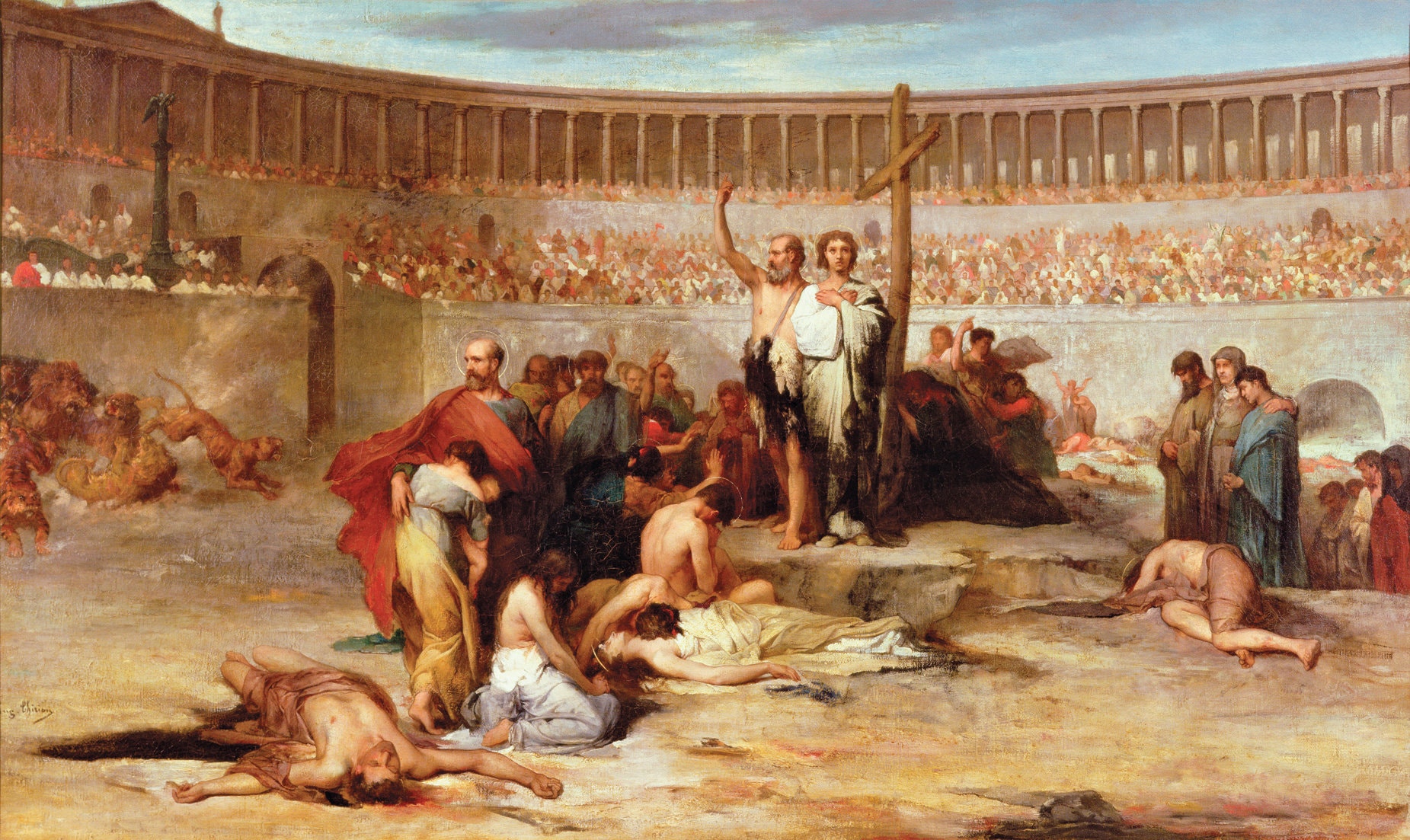
Persecutions under Diocletian
The persecutions under Emperor Diocletian (284–305) were the severest and most systematic persecutions of Christians in the Roman Empire. In order to restore the state religion and guarantee the unity of the Empire, Diocletian issued strict decrees in 304 — the probable year of Saint Agnes’ martyrdom. Christians were required to renounce their faith and offer sacrifice to the Roman gods; meetings were forbidden, sacred books were burned, and many were imprisoned and put to death. A great number of martyrs from this period of persecution have been included in the liturgical calendar or are venerated as local saints.
The glory that followed
Agnes was buried in the family tomb on the Via Nomentana. Eight days after her martyrdom she appeared in a vision to her parents, who were keeping watch at her grave: clothed in a white garment, with a lamb — symbol of Christ — at her side and surrounded by a great multitude of virgins. She said: Do not weep over me any longer as though I were dead, but rejoice, for with these virgins Jesus Christ has given me a glorious dwelling in heaven.
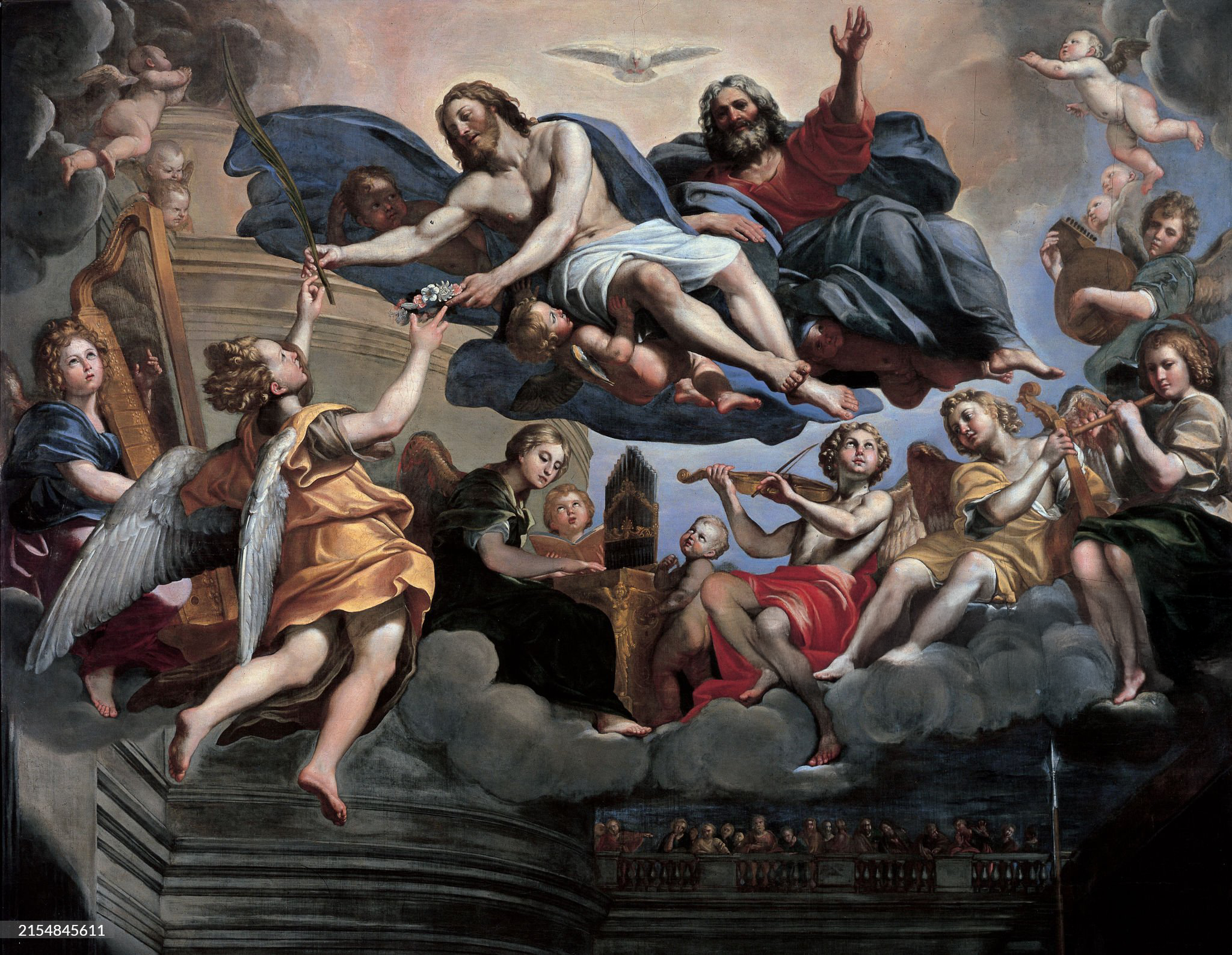
A veneration for the ages
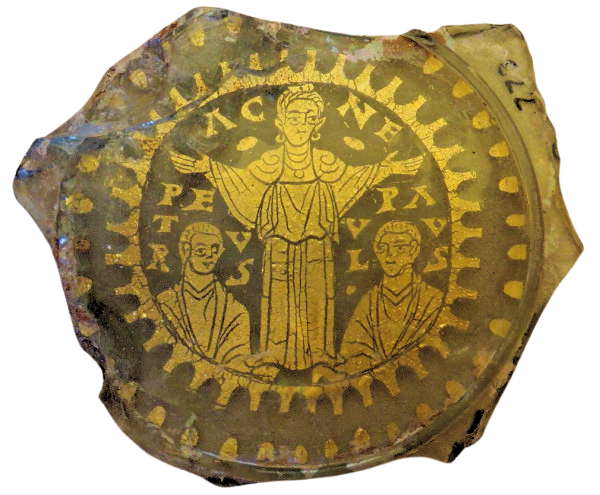
The impact of Agnes’ martyrdom was extraordinary. Within a few decades of her death she was already one of the most venerated saints in the Christian world — in honour immediately after the apostles Peter and Paul and the Blessed Virgin Mary. Proof of this is that her image has been found on ancient glass and pottery from the early third century.
At the request of his daughter Constantia — who had been cured of leprosy through the intercession of Saint Agnes — Emperor Constantine the Great had a basilica built over her grave on the Via Nomentana. Pope Sylvester I dedicated this church between 314 and 335.
In the seventh century Pope Honorius I (625–638) had the present Sant’Agnese fuori le Mura (“Saint Agnes outside the Walls”) built, with its splendid apse mosaic in which Agnes stands in imperial dress, crowned by the hand of God and surrounded by flames. Under Pope Honorius her head was also translated to the Sancta Sanctorum, the papal chapel of the Lateran Palace, where the relic was exposed for veneration. Her body still rests in her own basilica on the Via Nomentana. A marble slab by her tomb bears the inscription: AGNE SANCTISSIMA — Most holy Agnes.
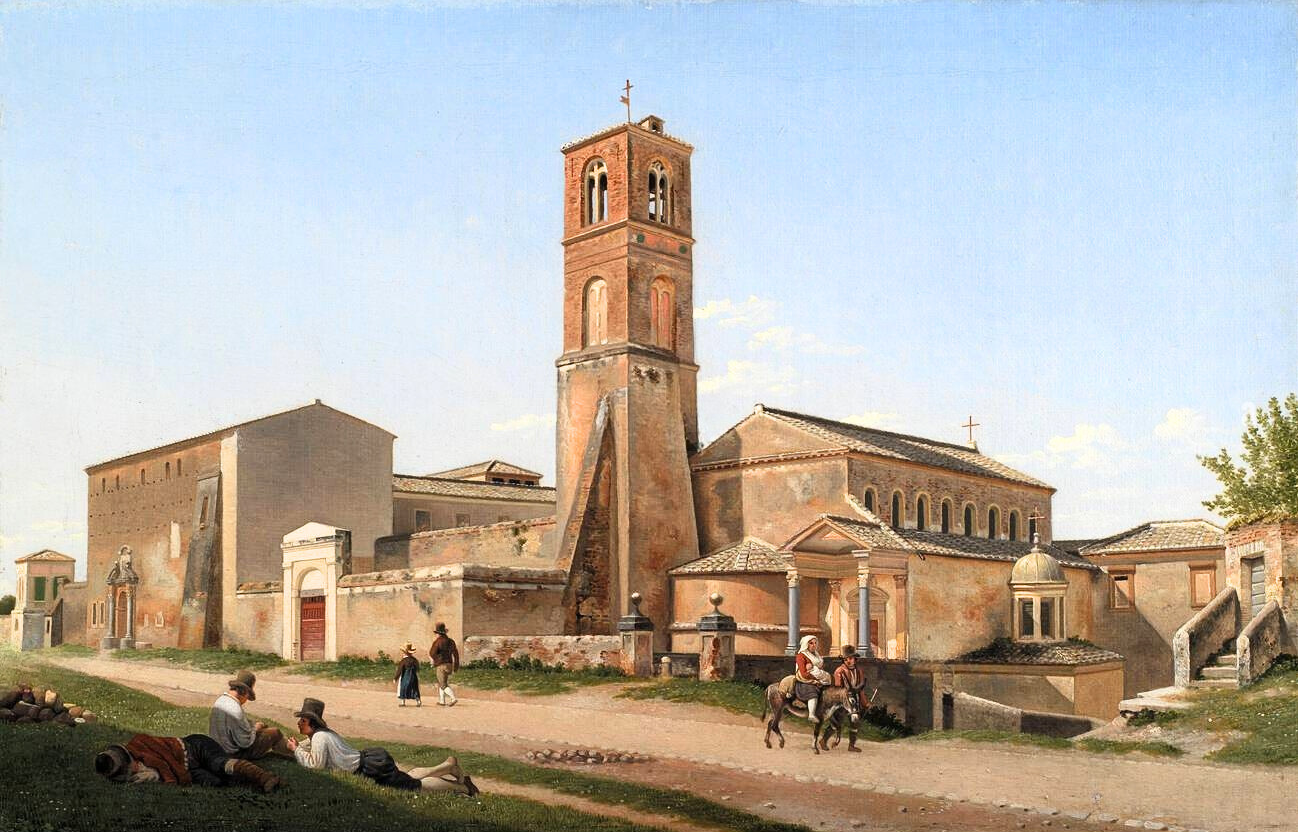
A second church is dedicated to her: Sant’Agnese in Agone on the Piazza Navona in Rome. This church stands on the traditional site where her modesty was exposed — according to legend, the location of the brothel to which she was led. The veneration of Agnes is therefore closely linked to these two Roman shrines: one over her grave, the other on the place of her greatest trial.
The tradition of the lambs
One of the most striking traditions connected with Saint Agnes still takes place on her feast day, 21 January, the day of her martyrdom. In her basilica two lambs are blessed after Holy Mass. They are carried on cushions — one with white ribbons and the other with red, as signs of virginity and martyrdom — and blessed during the singing of the Agnus Dei. The wool of these lambs is used for the making of the pallia, the insignia worn by archbishops and metropolitans.
Agnes in the Roman Canon
Agnes enjoys the extraordinary honour of being mentioned daily in the Roman Canon of the Holy Mass. She appears in the row of holy virgins and martyrs in the Nobis quoque — the part of the Canon that follows the apostles and early popes — together with Felicity, Perpetua, Agatha, Lucy, Cecilia and Anastasia. This is a sign of the highest honour and confirms her exceptional place in the veneration of the early Church.
Praise of saints and popes
Through the centuries Agnes has been honoured by the greatest Fathers and popes. Saint Jerome wrote that her praise is sung by the tongues and pens of all nations. Saint Ambrose, in a panegyric, extolled her as beautiful in body but still more beautiful in faith, and remarked that she went more gladly to her execution than others to their wedding. Saint Augustine, Saint Maximus of Turin and Saint Gregory the Great likewise praised her; Gregory even preached twice at her tomb. Pope Damasus I immortalised her story in the epitaph Fama refert. Many later popes — from Liberius and Honorius I to Paschal I, Alexander IV, Urban V, Innocent X and Pius IX — drew attention to her special devotion and were involved in restoring her basilica or translating her relics.
Saints inspired by Agnes
The influence of Agnes reached far beyond Rome and through the centuries. Saint Martin of Tours had a special devotion to her. Saint Thomas Aquinas always carried a relic of Agnes with him; at her intercession a sick companion of his was healed. Saint Bridget of Sweden saw Agnes as a teacher in her visions and was instructed by her. Thomas à Kempis mentions her as a constant intercessor in his time. Numerous holy writers from the early Church onwards call her one of the most celebrated saints.
A symbol for the ages — iconography
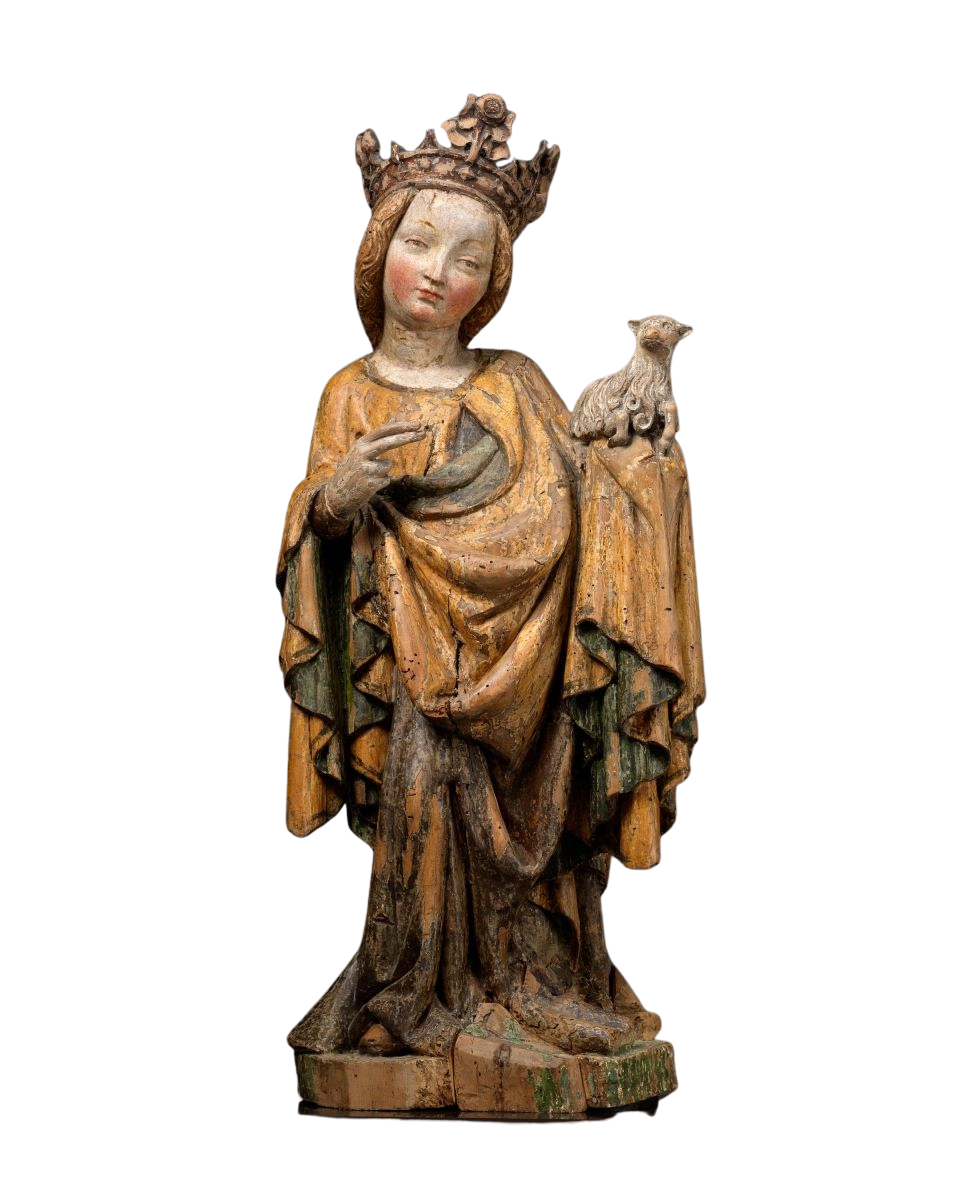
In art Agnes is always accompanied by her inseparable attribute: the lamb. She is often depicted as an Orans — a praying figure with outstretched arms and uplifted hands, a sign of her continual attitude of prayer. On ancient funerary glass she appears between two trees, symbols of Paradise, or between two doves bearing crowns, images of virginity and martyrdom.
Ancient attributes and dress. Among her earliest attributes are scrolls (volumina) and doves, symbols of wisdom and purity. Her clothing is often simple white, but sometimes richly adorned to show her heavenly dignity.
Iconography based on the miracles. The miraculous growth of her long hair, which covered her body when she was stripped to be led to the brothel, is a recurring theme in art. Pope Damasus I already mentioned this in his epigram. Sometimes she is shown surrounded by an angel who covers her with a garment, or depicted in the white robe given to her by the angel when the brothel was transformed into an oratory.
Other symbols. She is sometimes represented with a dove offering her a ring, referring to the miracle of the priest Paul whose temptations ceased after he placed a ring on her statue: the statue extended its finger and then closed it again.
Royal dignity. In mosaics Agnes is sometimes portrayed as a richly adorned queen — an image of her heavenly dignity and of the gifts of the Holy Spirit with which she said her heavenly Bridegroom had clothed her. In the famous seventh-century mosaic in the basilica fuori le Mura she wears a richly decorated Greek robe and a crown of precious stones. In the same way she is depicted on the mosaic above the main portal of our Agneskerk.
Feasts and Commemoration of Saint Agnes
21 January Dies natalis (the day of her martyrdom) and the blessing of the lambs.
28 January Commemoration of her apparition to her parents.