The Easter Vigil is the most holy and solemn celebration of the liturgical year. It begins in the night, when the Church blesses the new fire and the Paschal Candle is lit. This light, breaking the darkness, is carried into the church, while the chant is sung three times: Lumen Christi. Then the deacon sings the praise of the Paschal Candle, the Exsultet, in which the Church proclaims the night in which Christ rose from the tomb. Afterwards the Prophecies from the Old Testament are sung, recalling the great works of God, from the creation to the deliverance from Egypt, all directed toward the Resurrection of Christ. After the Gloria and the Gospel the liturgy turns to the font: the water is solemnly blessed, the Litany of the Saints is sung, and the Church prays for those who are reborn through Baptism. Finally the Holy Sacrifice of the Mass is celebrated, in which the Paschal offering of Christ is renewed upon the altar, and the faithful receive the Body and Blood of the risen Lord.
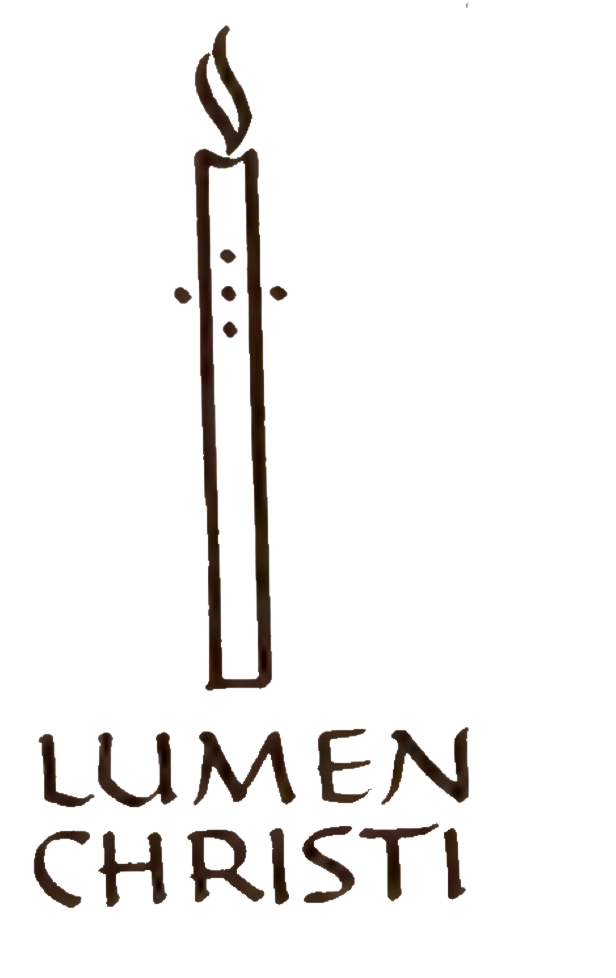
The Paschal Candle
The Paschal Candle is lit in the holy night from the newly blessed fire and solemnly carried into the church. Three times the chant Lumen Christi is sung, and the light spreads among the faithful. Thus the Church proclaims that Christ, risen from the dead, has dispelled the darkness of the night. In the ancient liturgical interpretation this candle itself is seen as the image of Christ, the true Light who has appeared in the world and has driven away the darkness of sin.
The flame
The flame signifies the divinity of Christ. As the flame gives light without destroying the candle, so Christ rose while the tomb remained closed. The light spreads throughout the entire church, while the one flame remains undivided. Thus the risen Lord illumines His people and drives away the darkness of sin.
The candle
The candle itself, formed from pure beeswax, signifies the Body of Christ, taken from the flesh of the Virgin. Therefore in the Exsultet the candle is praised as a worthy offering. As it burns and is consumed, it recalls the sacrifice of Christ, by whose death the light of life has arisen.
The wick
The wick signifies the soul of Christ, which bears the light. In the one candle, light and material support are united. As in Christ the divinity and humanity are united without separation, so the Paschal Candle unites flame, wick and wax in one light that illumines the night.
The grains of incense
Five grains of incense are inserted into the Paschal Candle in the form of a cross. They signify the five holy wounds of Christ. From His Passion shines the light of the Resurrection. Thus in the holy night both sacrifice and victory are proclaimed when the candle is lit.
Alpha and Omega
On the Paschal Candle the letters Alpha and Omega are inscribed. By this the Church confesses that Christ is the beginning and the end, the Lord of time and of the ages. The year is also inscribed, because Christ lives and reigns today, and His light continues to shine throughout the centuries.
Use in the liturgy
The Paschal Candle burns during the Easter season beside the altar. It is lit at Baptism, when new life in Christ is given. It is placed at the funeral, as a sign that those who die with Christ shall rise with Him. Thus the Paschal light remains in the Church until the night of this world passes and the eternal light dawns.
The Exsultet — The Praise of the Paschal Candle
The Exsultet is the ancient proclamation sung during the Easter Vigil at the blessing of the Paschal Candle. In this solemn chant the Church rejoices in the Resurrection of Christ, the victory of light over darkness, and the redemption of mankind. The candle itself symbolizes the risen Lord, whose light dispels the night and illumines the faithful.