Gospel of the Sunday (Mark 8:1–9)
AT THAT TIME, when there was again a great multitude, and they had nothing to eat, Jesus, calling together His disciples, saith to them: I have compassion on the multitude, because they have now been with Me three days, and have nothing to eat. And if I shall send them away fasting to their home, they will faint in the way: for some of them came from afar off. And His disciples answered Him: From whence can any one fill them here with bread in the wilderness? And He asked them: How many loaves have ye? Who said: Seven. And He commanded the people to sit down on the ground. And taking the seven loaves, giving thanks, He brake, and gave to His disciples for to set before them, and they set them before the people. And they had a few little fishes: and He blessed them, and commanded them to be set before them. And they did eat and were filled. And they took up that which was left of the fragments, seven baskets. And they that had eaten were about four thousand. And He sent them away.
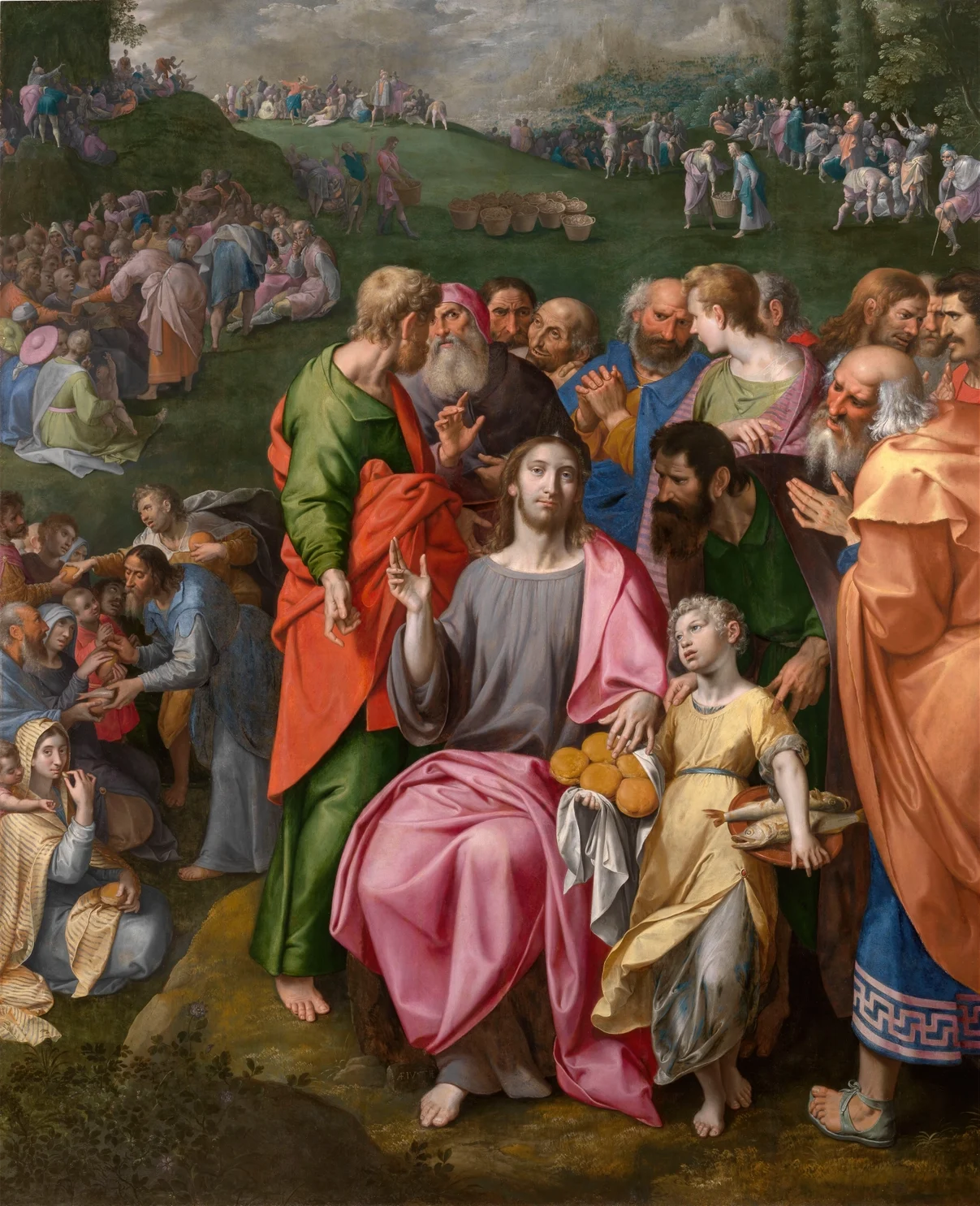
The Miracle of the Multiplication of the Loaves
When the fame of Our Lord’s miracles spread abroad, Herod also began to hear of Him. Believing that Saint John the Baptist had risen from the dead, he looked upon Jesus with fear. Our Lord therefore withdrew into a desert place. At the same time He granted His Apostles, who had returned weary from their first mission, the rest they so greatly needed.
Yet the multitudes followed Him on foot. When He came forth, He saw a great multitude. As Saint Mark says: They were as sheep not having a shepherd. Thus Christ teaches us to place the needs of others before our own ease and repose.
Towards evening the disciples wished to send the people away that they might buy food in the neighbouring villages. But Jesus answered: They have no need to go. Give you them to eat. By these words He prepared the miracle. He first allowed the insufficiency of all human resources to become manifest, that the omnipotence of God might afterwards appear all the more glorious.
Saint John relates that Our Lord said to Philip: Whence shall we buy bread, that these may eat? This He said to try him, for He Himself knew what He would do. Philip answered: Two hundred pennyworth of bread is not sufficient for them, that every one may take a little. Then Andrew pointed to a boy who had five barley loaves and two fishes, saying: But what are these among so many? Nevertheless the Apostles willingly placed everything they possessed into the hands of Christ. Their obedience, faith, and charity prepared the way for the miracle.
Our Lord commanded the multitude to sit down in companies upon the green grass, that all things might be done in good order and that none should be overlooked.
He looked up to heaven, blessed the loaves, brake them, and gave them to His disciples.
Cornelius a Lapide observes that Christ not only gave thanks to His heavenly Father, but also blessed the loaves themselves. By this divine blessing they were appointed to their miraculous multiplication and received the power to feed so great a multitude.
This multiplication of the loaves was, according to a Lapide, a figure of the Holy Eucharist. Shortly afterwards Our Lord delivered His great discourse on the Bread of Life, recorded by Saint John in the sixth chapter: Not as your fathers did eat manna, and are dead. He that eateth this bread shall live for ever.
Saint Augustine says: From the same power whereby God brings forth abundant harvests from a few grains, He multiplied the loaves in His own hands. The five loaves were as seed, not committed to the earth, but multiplied by Him who created the earth.
Saint John Chrysostom says: The five loaves were multiplied in the hands of the disciples and flowed forth as from a fountain.
Saint Hilary says: Fresh pieces continually followed those which were broken, and what was broken never failed the hand that brake it.
Saint Jerome says: Whilst they brake the bread, it was as though they were sowing food.
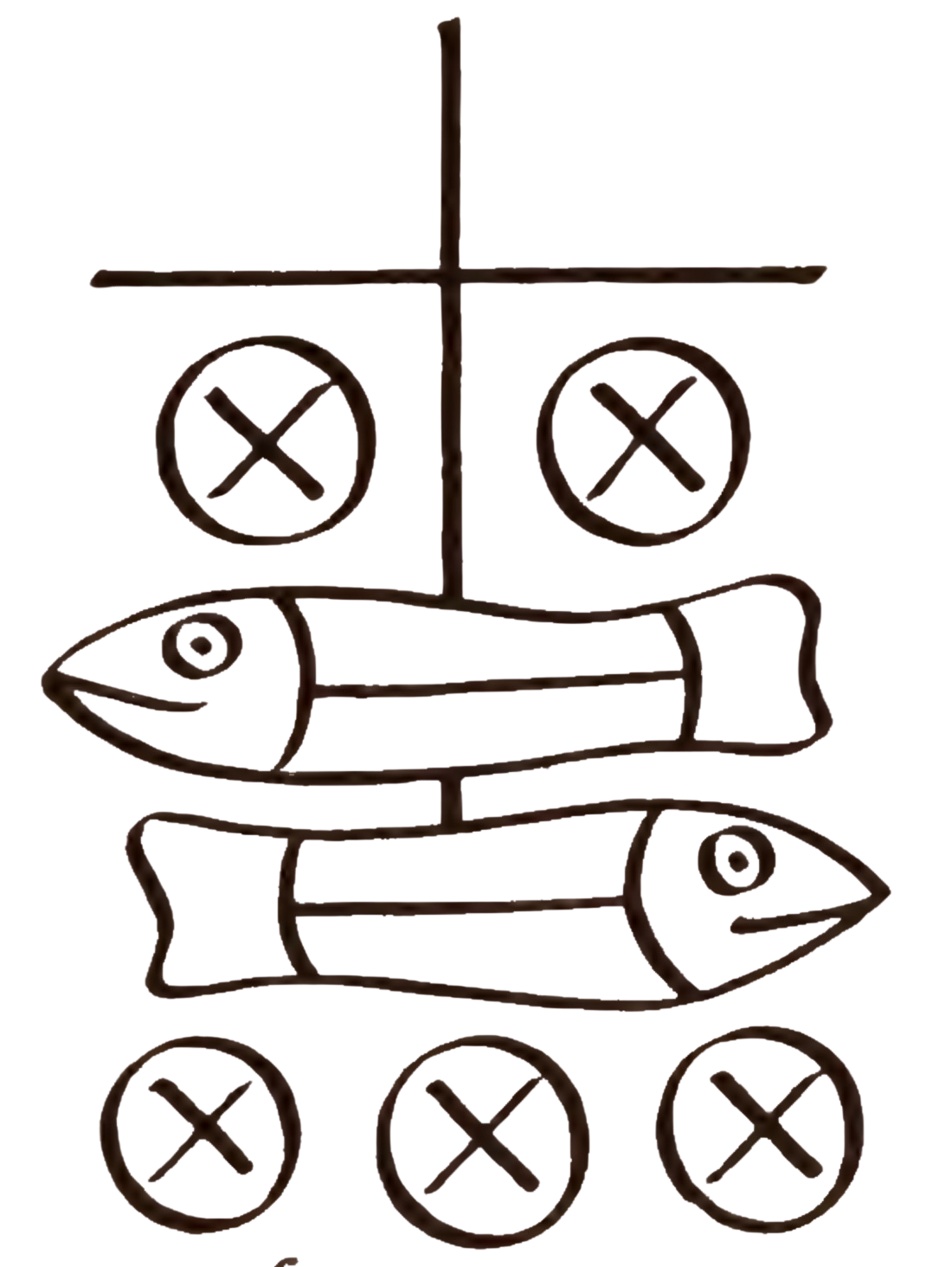
Bread and riches, whether temporal or spiritual, are not diminished by almsgiving, but are multiplied a hundredfold, even a thousandfold.
In the moral sense Christ teaches us that bread and riches, whether temporal or spiritual, do not diminish when bestowed in alms. Rather, under the blessing of God, they are multiplied a hundredfold, even a thousandfold.
Saint John, Patriarch of Alexandria, surnamed the Almoner, was wont to say that daily experience had taught him this truth: the more he bestowed upon the poor, the more he received from God. He would often say: I shall see, O Lord, who will first cease, Thou in giving unto me, or I in distributing to the poor.
Pope Adrian II once received forty denarii as a gift. His steward thought so small a sum could never suffice for the multitude of poor gathered before the house. Adrian himself therefore took the money, distributed it among them, and afterwards said: See how good and generous the Lord is, especially towards those who are themselves generous to the poor.
Saint Lidwina of Schiedam, though herself poor, continually relieved those in need. She possessed only a few coins in a small purse, yet whenever she gave to the poor, the empty place was miraculously filled again. Thus her little purse never failed, and came to be known as the Jesus-purse.
Therefore the Apostle writes: He which soweth sparingly, shall also reap sparingly: and he which soweth in blessings, shall also reap blessings. When you give a loaf or a coin to the poor, you do not lose it. Rather, you sow it. As many ears spring from a single grain of wheat, so every work of Christian charity bears fruit beyond all expectation.
All ate and were filled. Cornelius a Lapide remarks that Christ gave them no wine, because there was running water near at hand. God provides what is necessary for man’s sustenance, not what serves luxury or excess.
Thus an Angel brought Elias bread and a cruse of water in the wilderness, but no wine. Likewise a raven, at God’s command, brought daily bread to Saint Paul the First Hermit, whilst he quenched his thirst from a neighbouring spring. From Adam until the Flood, before Noe planted the first vineyard, the just lived upon the fruits of the earth and drank water. Yet they attained an extraordinary length of days. Therefore temperance is not only the mother of health, but likewise of wisdom and holiness.
After all had eaten, the Apostles gathered together twelve baskets full of fragments. They carried away more bread than they had first brought unto Christ. As they distributed it among the multitude, the loaves continued to multiply in their very hands.
Thus Our Lord manifested His divine power over all creation. From five loaves He fed thousands, and yet there remained an abundance. For this reason the Church has ever recognised in this great miracle a figure of the Holy Eucharist, whereby Christ continues to nourish His faithful unto life everlasting.