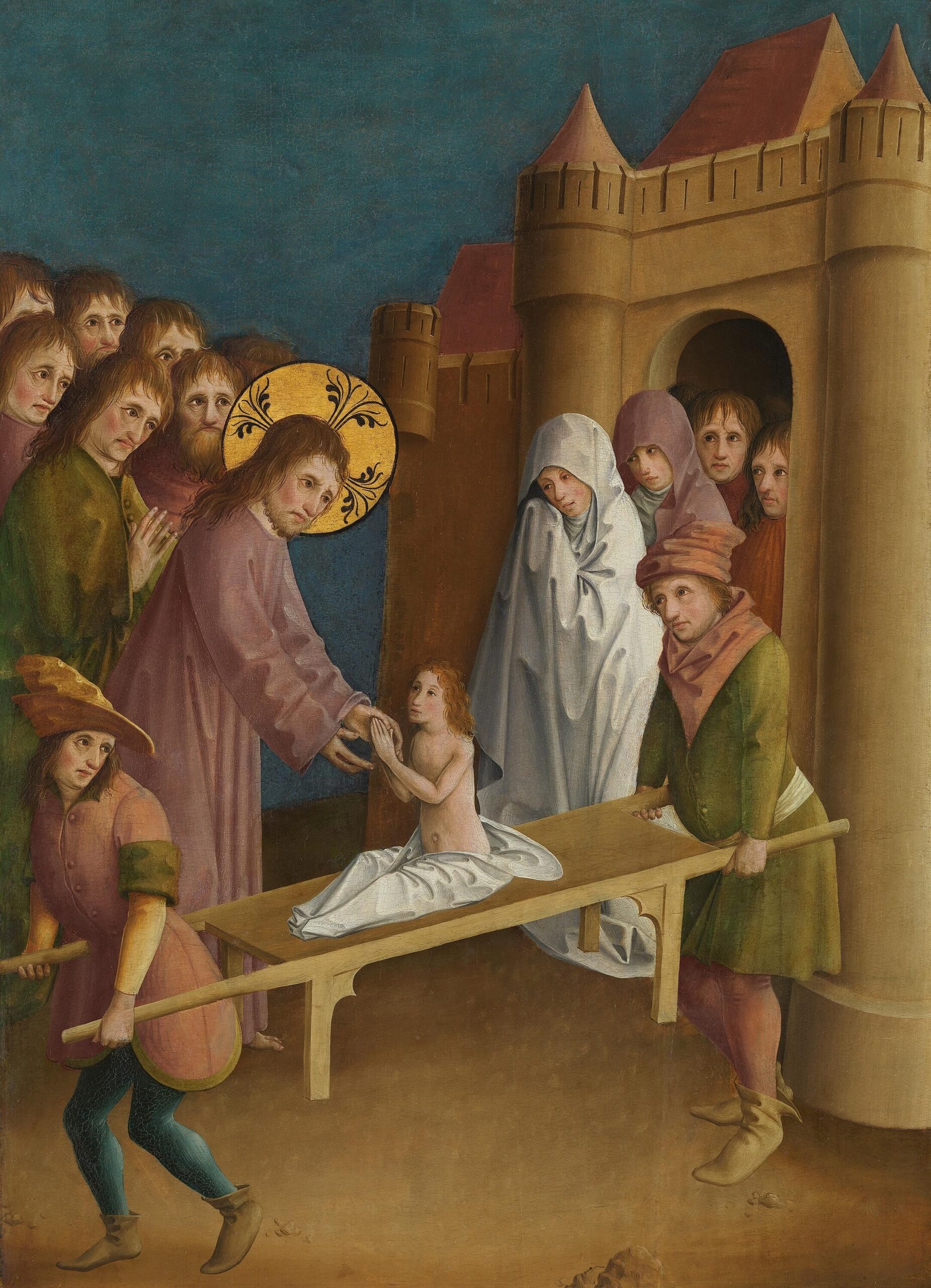
Continuation of the holy GOSPEL according to St. Luke, 7, 11-16
AT THAT TIME Jesus went into a city that is called Naim; and there went with him his disciples, and a great multitude. And when he came nigh to the gate of the city, behold a dead man was carried out, the only son of his mother; and she was a widow: and a great multitude of the city was with her. Whom when the Lord had seen, being moved with mercy towards her, he said to her: Weep not. And he came near and touched the bier. And they that carried it stood still. And he said: Young man, I say to thee, arise. And he that was dead, sat up, and began to speak. And he gave him to his mother. And there came a fear on them all: and they glorified God, saying: A great prophet is risen up among us: and, God hath visited his people.
This man, however, was no longer in the house, yet neither was he in the grave. He had been carried outside the walls, but had not yet been committed to the earth. St. Augustine, Sermon 98. The Raising of the Young Man of Naim, Master of the Darmstadt Passion, c. 1435, Bayerische Staatsgemäldesammlungen.
St. Augustine on the three dead whom Christ raised
Let us then see what He wished to teach us in the three dead whom He raised. He raised the dead daughter of the ruler of the synagogue, to whom, while she was sick, He had been called that He might deliver her from her sickness. And while He was on His way, word was brought that she had died. As though He should now trouble Himself in vain, her father was told: The maid is dead, why troublest thou the Master any further? But He went on and said to the father of the maid: Fear not, believe only. He came to the house and found that the preparations for the burial had already been made. And He said to them: Weep not, for the maid is not dead, but sleepeth. He spoke the truth. She slept, but to Him by whom she could be awakened. He raised her and restored her alive to her parents. He also raised this young man, the son of the widow, concerning whom we have now been admonished, that from this occasion we might speak to your Charity of that which He Himself deigns to grant us. You have just heard how he was raised. The Lord drew near to the city and behold, a dead man was already being carried outside the gate. Moved with compassion, because his mother, a widow and bereft of her only son, was weeping, He did what you have heard and said: Young man, I say to thee, arise. That dead man arose, began to speak, and He gave him back to his mother. He also raised Lazarus from the grave. When the disciples with whom He spoke knew that Lazarus was sick, for he was dear to Him, He said: Lazarus our friend sleepeth. They thought that sleep would be for the sick man unto health and said: Lord, if he sleep, he shall do well. And He said, now speaking more plainly: Lazarus our friend is dead. Both were true: to you he is dead, to Me he sleepeth. These three kinds of dead are three kinds of sinners, whom Christ even now raises. The dead daughter of the ruler of the synagogue was within the house. She had not yet been carried outside from the enclosure of the walls into public view. There within she was raised and restored alive to her parents. This man, however, was no longer in the house, yet neither was he in the grave. He had been carried outside the walls, but had not yet been committed to the earth. He who raised the dead person who had not yet been carried out also raised the dead man who had already been carried out, but was not yet buried. There remained yet a third, namely that He should also raise one who had been buried. And this He did with Lazarus. There are therefore men who have sin within their heart, but not yet in the deed. A man is moved by a certain desire. For the Lord Himself says: Whosoever shall look on a woman to lust after her, hath already committed adultery with her in his heart. He has not yet approached her in body, but in his heart he has consented. He has the dead within himself, but has not yet carried him outside. And as happens, as we know and as men daily experience within themselves, sometimes when the word of God is heard, as though the Lord were saying: Arise, consent to iniquity is condemned, and the man revives unto salvation and justice. The dead rises within the house, the heart revives in the hidden place of thought. This resurrection of the dead soul has taken place within, in the secrecy of conscience, as it were within the walls of the house. Others, after giving consent, proceed to the deed, as though carrying the dead man outside, so that what lay hidden in secret appears in public. Are then those who have already proceeded to the deed without hope? Was it not also said to that young man: I say to thee, arise? Was not he also given back to his mother? So too he who has already committed the deed, if, admonished and moved by the word of truth, he rises at the voice of Christ, is restored alive. He could go farther, but he could not be lost forever. But those who, by doing evil, also become entangled in an evil habit, so that the habit of evil no longer allows them to see that it is evil, become defenders of their wicked deeds. They grow angry when they are rebuked, so much so that the inhabitants of Sodom once said to the just man who reproved their most wicked will: Thou camest hither to sojourn, not to make laws. So great there was the habit of shameful corruption that wickedness was already accounted justice, and he who forbade it was reproved rather than he who committed it. Such men, weighed down by an evil habit, are as though buried. But what shall I say, brethren? So buried that it was said of Lazarus: He stinketh already. The stone laid upon the grave is the hard power of habit itself, by which the soul is weighed down and is not permitted to rise or to breathe. (St. Augustine, Sermon 98, 4–5)