Continuation of the holy GOSPEL according to St. Matthew, 22, 34–46
AT THAT TIME, the Pharisees came to Jesus, and one of them, a doctor of the law, asking him, tempting him: Master, which is the great commandment in the law? Jesus said to him: Thou shalt love the Lord thy God with thy whole heart, and with thy whole soul, and with thy whole mind. This is the greatest and the first commandment. And the second is like to this: Thou shalt love thy neighbour as thyself. On these two commandments dependeth the whole law and the prophets. And the Pharisees being gathered together, Jesus asked them, saying: What think you of Christ? Whose son is he? They say to him: David’s. He saith to them: How then doth David in spirit call him Lord, saying: The Lord said to my Lord: Sit on my right hand, until I make thy enemies thy footstool? If David then call him Lord, how is he his son? And no man was able to answer him a word; neither durst any man from that day forth ask him any more questions.
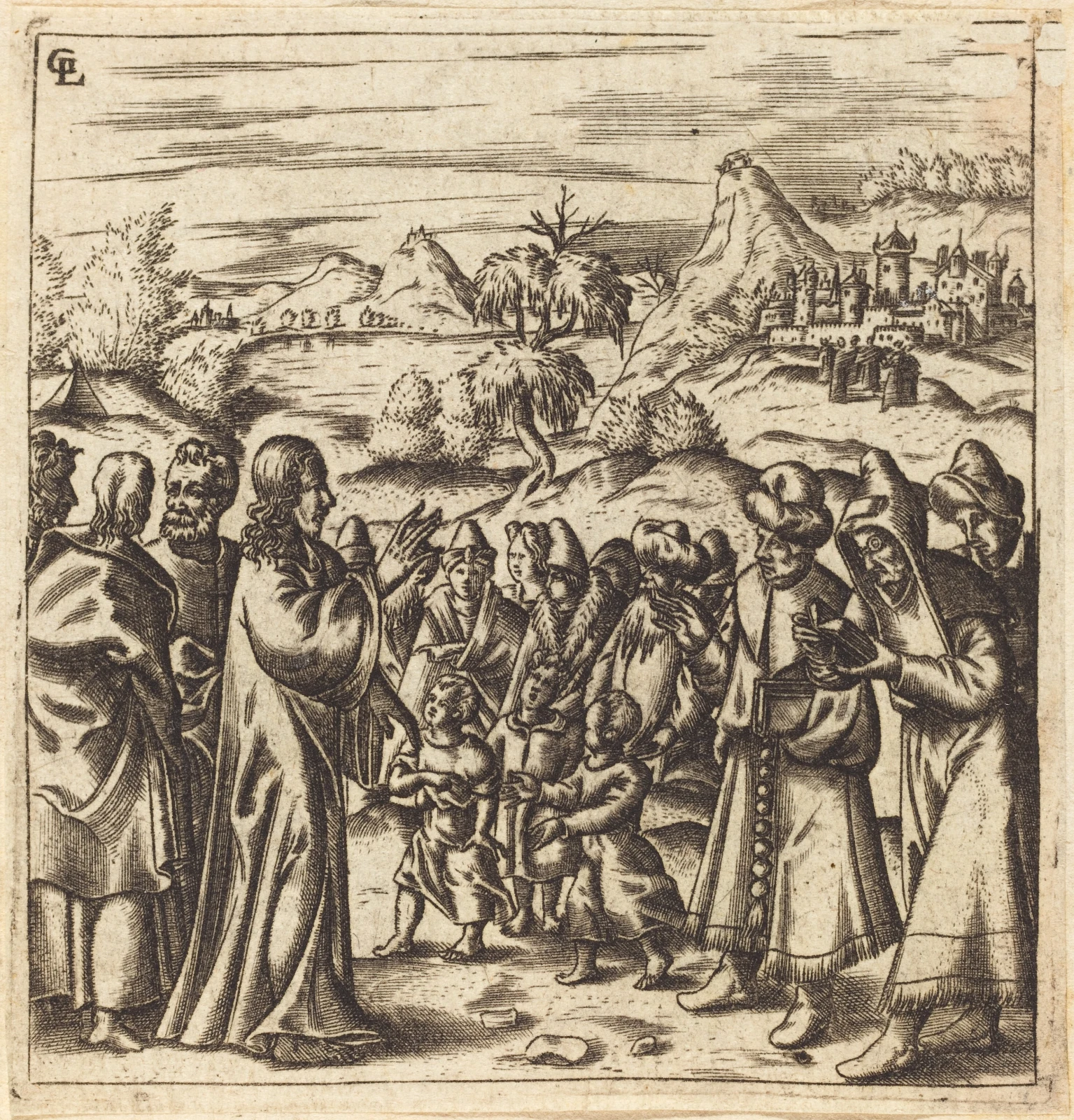
St. Augustine on the love of God and neighbour
In the first book of De doctrina christiana, St. Augustine examines how man’s love ought to be ordered. He expressly considers the two commandments which Christ joins together in the Gospel: to love God with the whole heart, the whole soul and the whole mind, and to love one’s neighbour as oneself. Augustine therefore asks what it actually means to love oneself and one’s neighbour rightly. God alone is the unchangeable Good in whom man finds his ultimate joy. From this principle Augustine explains the words as thyself.
To love God with thy whole heart
No one, however, ought to seek his ultimate joy in himself, if the matter is rightly considered, for neither ought a man to love himself for his own sake, but for the sake of Him in whom he is to find his joy. For man is at his best when his whole life is directed towards the unchangeable Life and he cleaves to it with his whole love. But if he loves himself for his own sake, he does not direct himself towards God, but turns towards himself, and therefore towards something that is not unchangeable. And for this reason his joy in himself is already defective, for he is better when he wholly cleaves and binds himself to the unchangeable Good than when he withdraws himself from it even towards himself. If, therefore, thou oughtest not to love thyself for thy own sake, but for the sake of Him in whom the perfectly right end of thy love is found, let no other man take offence when thou lovest him also for the sake of God.
For this is the rule of love established by God: Thou shalt love thy neighbour as thyself. God, however, with thy whole heart, with thy whole soul and with thy whole mind, so that thou directest all thy thoughts, thy whole life and thy whole understanding towards Him from whom thou hast received those very things which thou directest towards Him. When He says, however, with thy whole heart, with thy whole soul and with thy whole mind, He has left no part of our life free from this obligation, as though it might be allowed room to seek its ultimate joy in something else. But whatever else comes into our thoughts and ought to be loved must be carried along towards that same end towards which the whole impulse of love is directed. Whoever therefore rightly loves his neighbour ought to strive with him that he too may love God with his whole heart, his whole soul and his whole mind. For in thus loving him as himself, he directs the whole love of himself and of that other man towards the love of God, which suffers no little stream to be drawn away from itself, by whose diversion it would be diminished.
To love thy neighbour as thyself
Since, therefore, it is not necessary that anyone should receive a commandment to love himself and his own body, because we love what we ourselves are and what is beneath us yet belongs to us by an unalterable law of nature which has been given even to the animals, for the animals also love themselves and their bodies, it remained that commandments should be given to us concerning Him who is above us and him who is beside us. Thou shalt love, He says, the Lord thy God with thy whole heart and with thy whole soul and with thy whole mind, and thou shalt love thy neighbour as thyself. On these two commandments depend the whole law and the prophets. The end of the commandment is therefore love, and this love is twofold: the love of God and the love of our neighbour.
If by thyself thou understandest thy whole person, that is, thy soul and thy body, and by thy neighbour likewise his whole person, that is, his soul and his body, for man consists of soul and body, then in these two commandments no kind of thing that ought to be loved has been omitted. For since the love of God takes precedence and the manner in which He is to be loved is expressly prescribed, so that all other things are gathered into it, nothing seems to have been said concerning thy love of thyself. But when it is said, Thou shalt love thy neighbour as thyself, thy love of thyself has at the same time not been omitted.
The order of love
He lives justly and holily who judges things according to their proper worth. Such a man possesses an ordered love, so that he does not love what ought not to be loved, nor fail to love what ought to be loved, nor love more what ought to be loved less, nor equally what ought to be loved either less or more, nor less or more what ought to be loved equally. Every sinner, in so far as he is a sinner, ought not to be loved. Every man, however, in so far as he is a man, ought to be loved for the sake of God, but God for His own sake. And if God ought to be loved more than any man, then every man ought also to love God more than himself. Likewise another man ought to be loved more than our own body, because all these things ought to be loved for the sake of God, and another man can rejoice in God together with us, which the body cannot do, because the body lives through the soul, through which we find our joy in God.
Source: St. Augustine, De doctrina christiana, Book I, 22 and 26–27.