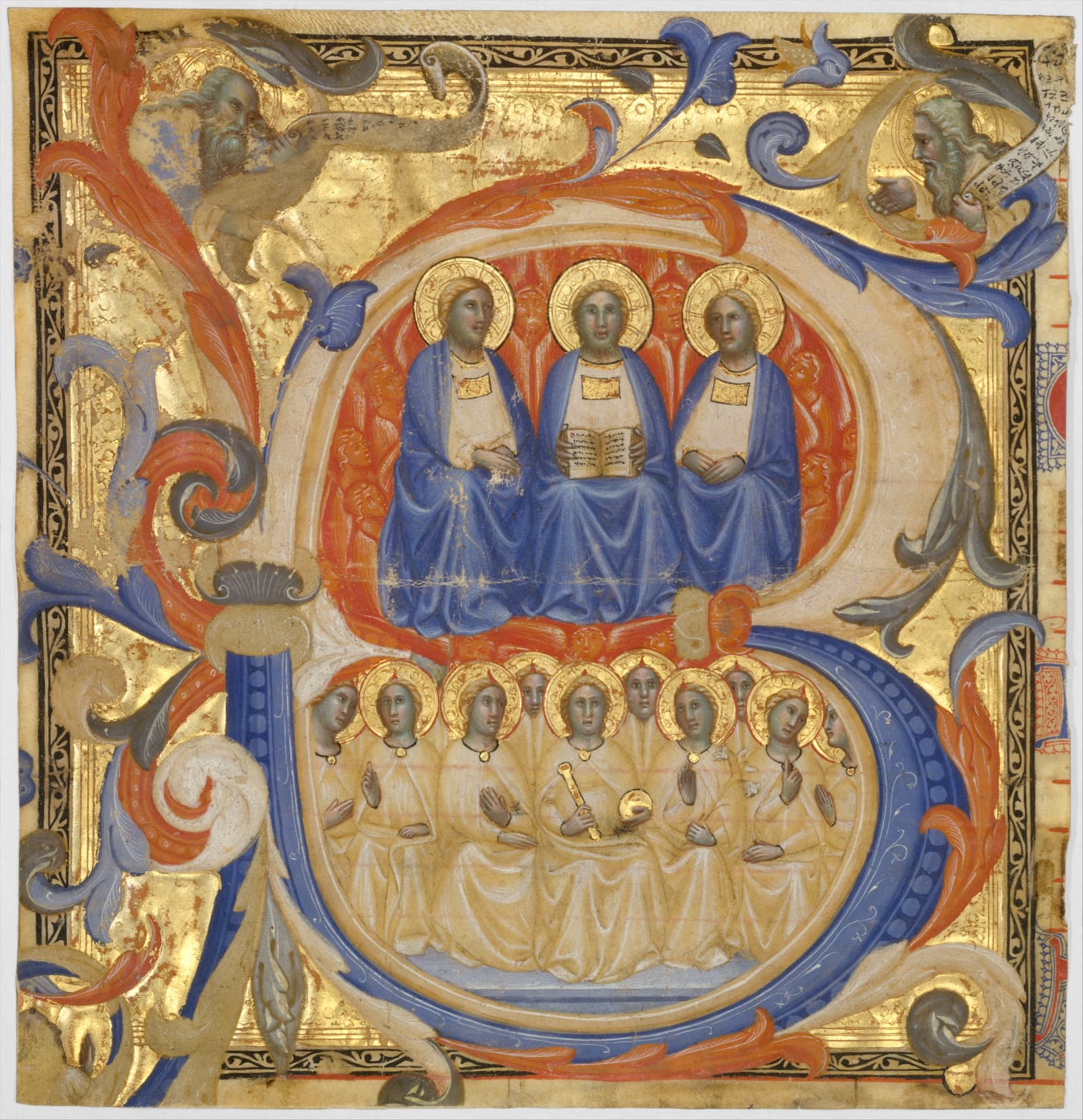
Gospel of Trinity Sunday (Matthew 28:18–20)
At that time Jesus spoke to His disciples: All power is given to Me in heaven and in earth. Going therefore, teach ye all nations; baptizing them in the Name of the Father, and of the Son, and of the Holy Ghost. Teaching them to observe all things whatsoever I have commanded you. And behold I am with you all days, even to the consummation of the world.
Glory be to the Father, and to the Son, and to the Holy Ghost.
The feasts and seasons that we have celebrated throughout the liturgical year up to this point have been closely connected with the history of salvation, especially with the Gospel accounts of the life of Christ. From Christmas until Pentecost we have followed, in the sacred mysteries, the earthly life and work of our Divine Redeemer. The Holy Sacrifice of the Mass, offered on the various feasts and weekdays, makes present once again the sacred event that is commemorated and imparts to us its particular graces. We now enter upon a series of feasts of a different character: doctrinal feasts, in which a mystery of the Catholic Faith itself becomes the object of the Church’s liturgical veneration. In these mysteries of faith, the connection with the sacrificial mystery is less direct, for the Church celebrates the Holy Mass not to commemorate an event in salvation history, but in honour of a revealed truth.
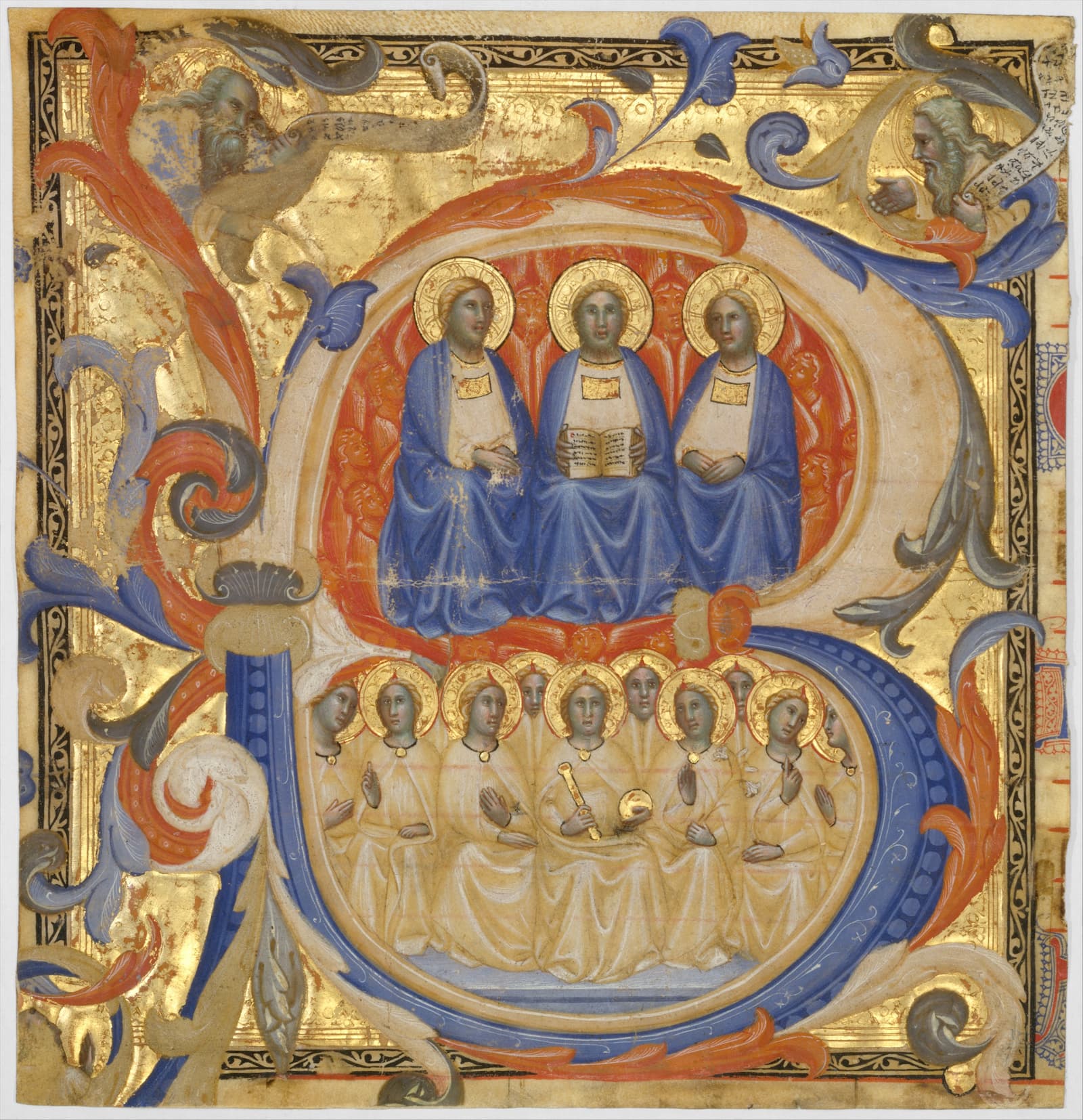
The first of these feasts, the Solemnity of the Most Holy Trinity, has as its object the greatest, deepest, and most incomprehensible truth of our holy Faith. This feast was introduced into the universal Church in the year 1334 by Pope John XXII.
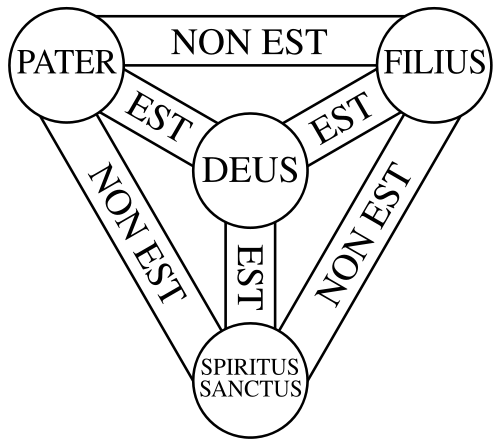
The truth of faith celebrated today is this: there is one God, and in this one God there are three Divine Persons. The Father is God, the Son is God, and the Holy Ghost is God. Yet there are not three gods, but one eternal and incomprehensible God. The Father is no more God than the Son, and the Son is no more God than the Holy Ghost. The Father is the First Divine Person. The Son is the Second Divine Person, eternally begotten of the substance of the Father. The Holy Ghost is the Third Divine Person, proceeding from the Father and the Son.
No mortal can fully comprehend this sublime mystery. Therefore we submit ourselves in humility and say: Lord, I believe; help Thou mine unbelief.
Why is this feast celebrated at this particular time? It may be regarded as the crowning of all the preceding feasts. All three Divine Persons have cooperated in the work of redemption. The Father sent His Son into the world, for God so loved the world that He gave His only-begotten Son. The Father called us to the Faith. The Son, our Redeemer Jesus Christ, became man and died for us. He redeemed us and made us children of God. He remains forever the supreme Liturgist, with Whom we are united in all sacred worship. After Christ’s Ascension, however, the Holy Ghost became our Teacher, our Guide, our Leader, and our Comforter. Therefore, on solemn occasions, a grateful Te Deum rises naturally from Christian hearts.
The Solemnity of the Most Holy Trinity may rightly be regarded as the Church’s Te Deum for all the blessings of Christmas and Easter. The mystery we celebrate today embraces Christmas, Epiphany, Easter, Ascension, and Pentecost. This feast, which falls on the first Sunday after Pentecost, reminds us that every Sunday is in fact dedicated to the honour of the Most Holy Trinity and consecrated to the Triune God. Each Sunday we ought gratefully to remember the gifts bestowed upon us by the Most Holy Trinity. The Father created us and predestined us; on the first day of the week He began the work of creation. The Son redeemed us; Sunday is the Lord’s Day, the day of His Resurrection. The Holy Ghost sanctified us and made us His temple; on a Sunday He descended upon the infant Church. Therefore Sunday is, in a special way, the day of the Most Holy Trinity. (Ildefonso Schuster, Sacramentary)