15 August – On this day the Church celebrates that, at the end of her earthly life, the Blessed Virgin Mary was gloriously assumed body and soul into heavenly glory. Her Assumption belongs to the oldest and most important feasts of Our Lady. In the East the celebration was widespread from an early period, and towards the end of the sixth century 15 August was established there as the feast day. The feast was also celebrated at an early date in Rome. Pope Sergius I gave the celebration greater solemnity and ordered that on this day a solemn procession should proceed to Santa Maria Maggiore, where the Pope celebrated the Station Mass.
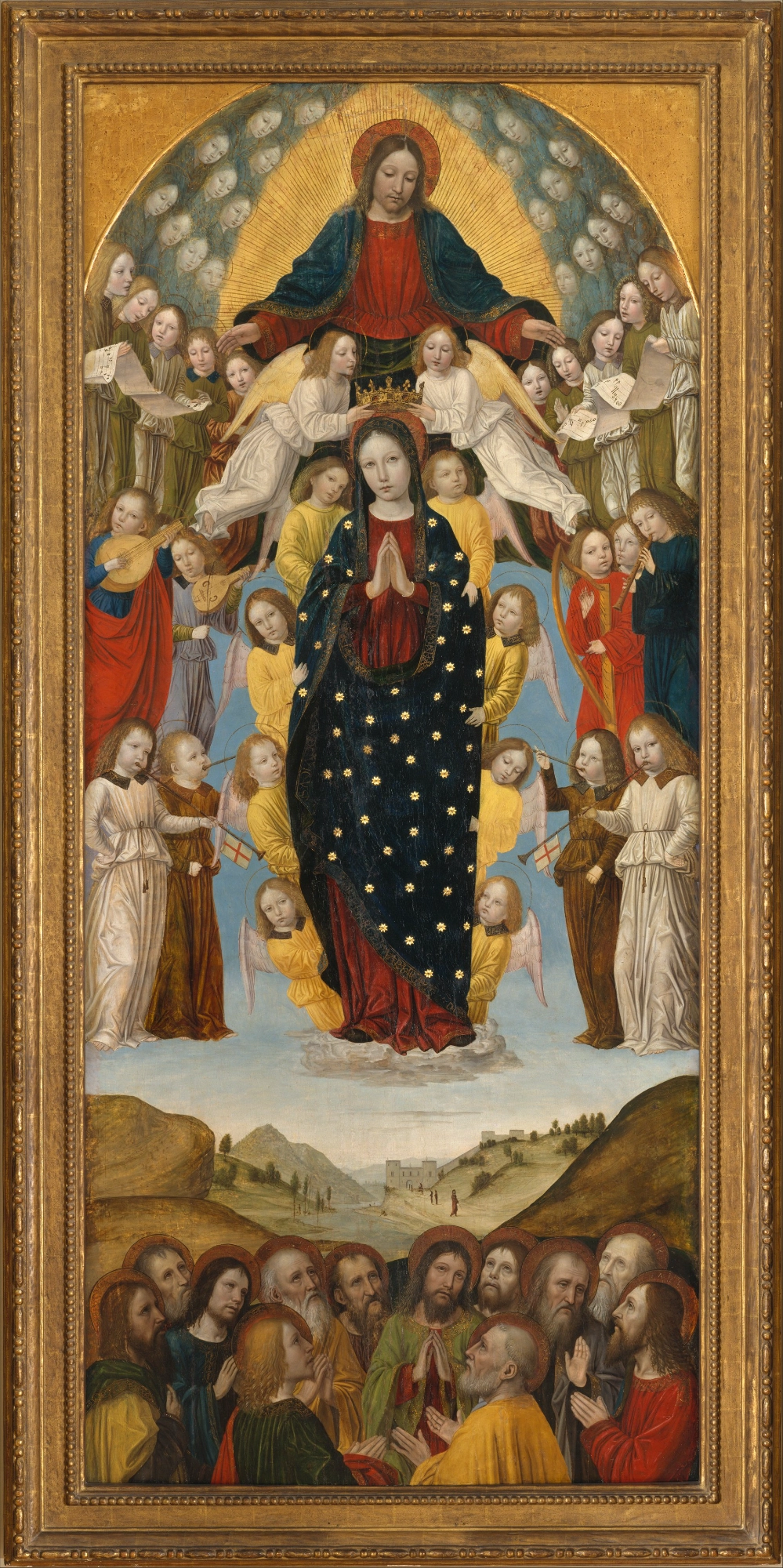
The Virgin Mary has been taken up into the heavenly bridal chamber, where the King of kings sits upon a throne adorned with stars. Alleluia.
The departure and Assumption of Mary
On this day three things are commemorated: the blessed departure of Mary, the Mother of Jesus, from this world, her glorious Assumption into heaven and her coronation in heaven. Christ our Lord did not take His Mother with Him when He ascended into heaven, although He had the power to do so, but willed that she should remain for some years longer upon earth, for the consolation and example of Christians. The holy Mother spent this time in great holiness, in prayer and contemplation of the heavenly mysteries and joys, in remembrance of all that her beloved Son had done during thirty three years for the salvation of mankind, and in instructing and encouraging the Christians. Her desire to be taken from the earth and reunited with her Son increased daily. God heard her prayer and sent an angel to announce to her the day of her departure.
When that day had come, according to tradition the Apostles were present with her, with the exception of Saint Thomas. Mary exhorted them to persevere in their zeal, assured them of divine assistance and of her maternal intercession in heaven, and took leave of them. Christ then appeared to His blessed Mother, accompanied by innumerable heavenly spirits, and invited her to enter the glory of heaven. Filled with unspeakable joy, Mary repeated the words she had so often spoken: Be it done unto me according to thy word. She then gave her soul into the arms of her divine Son.
The Apostles and the other Christians prepared her holy body for burial. According to tradition they remained for three days at the tomb, continually glorifying God. When Saint Thomas afterwards arrived, he was deeply grieved that he had not been present at the departure of the Blessed Virgin. He asked the Apostles to open the tomb, that he might at least see and venerate her holy body. They opened the tomb, but no longer found the body, only the linen in which it had been wrapped. They understood that the soul of the Mother of Jesus, which at her departure had gone to heaven, had by a special divine privilege been reunited with her body, and that she had been assumed body and soul into the eternal Kingdom. This is what is commemorated on the feast of this day. (Weninger)
The bodily Assumption of Mary
The sacred liturgy professes the Catholic faith in the Assumption of Mary. The title of the feast is Assumptio, and the liturgy continually repeats this word. It cannot refer merely to the assumption of her soul, for that is common to all the elect. The word therefore points to a special privilege granted to Mary alone and concerning her virginal body.
The ancient Roman liturgy also speaks of the death of the Mother of God. The Gregorian Sacramentary says: Sancta Dei Genitrix mortem subiit temporalem, nec tamen mortis nexibus deprimi potuit. The holy Mother of God underwent temporal death, yet she could not be held by the bonds of death. Her victory over death was therefore twofold. She gave her soul in original holiness into the hands of her Son, and, without being held by the bonds of death, she was also assumed bodily into heaven. (Schuster, The Sacramentary)
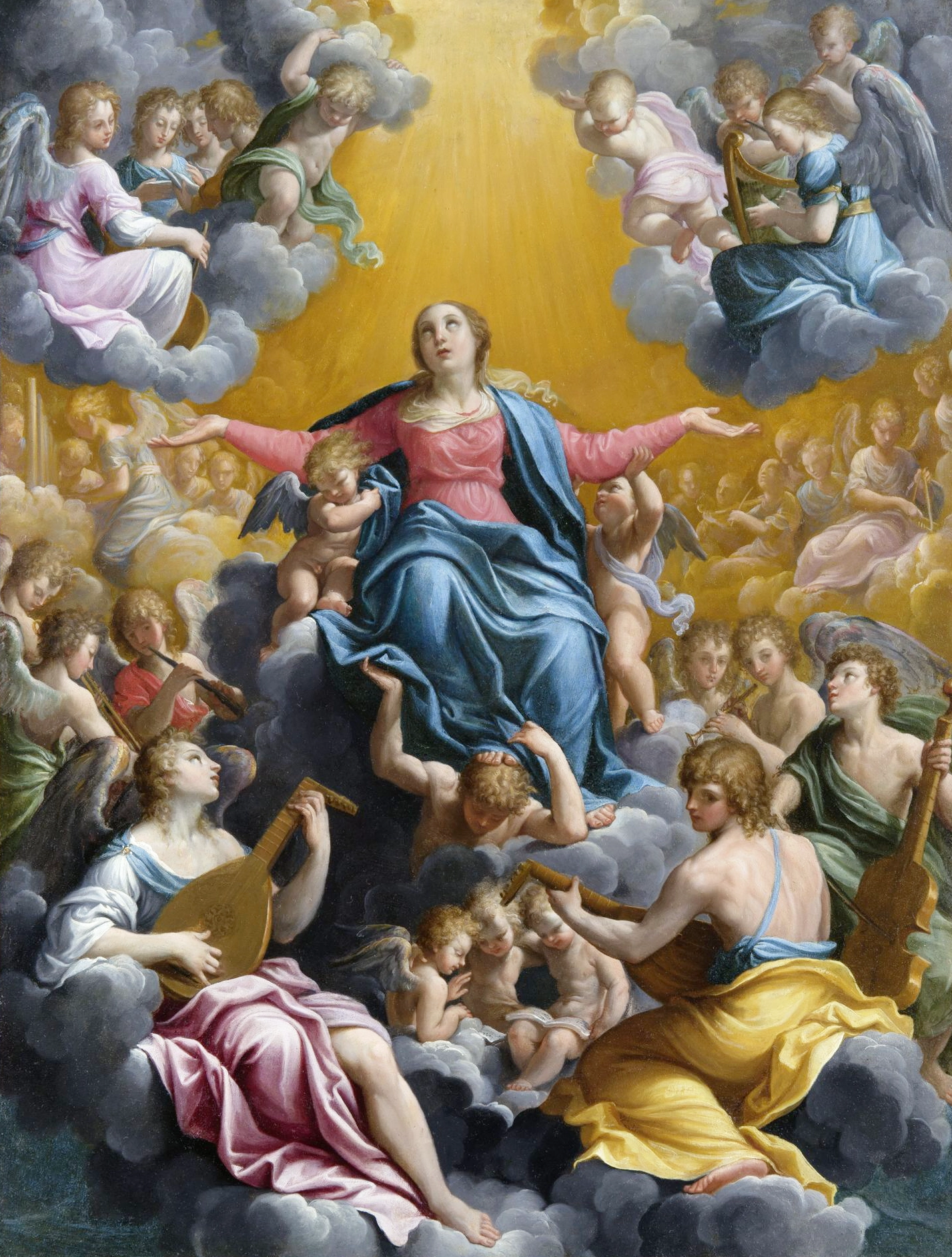
Mary’s glory in heaven
How great was the joy with which Mary was received by the Most Holy Trinity and by the whole heavenly host no human tongue can describe. Her divine Son placed her above all the choirs of angels and above all the saints and crowned her Queen of heaven and earth. There she received the reward of her sublime dignity as Mother of God, of her perfect virtues and of all the sufferings she had endured during her life, especially during the Passion and death of her divine Son.
As Mary surpasses all angels and saints in dignity and holiness, so she surpasses them also in glory and beatitude. She stands nearest to the throne of God and, after God, possesses the highest place in heaven. There she enjoys the vision of Him whom she loved above all things on earth and to whom she had consecrated her whole life.
From this exalted place Mary does not forget her children on earth. She knows our needs and dangers and is ready to help us. Her powerful intercession with her divine Son is a reason for our confidence. Let us therefore have recourse to her and ask her to assist us during our life, to protect us at the hour of our death and one day to help us reach the place where she reigns with her divine Son in eternal glory. (Weninger)