Solemnity of the Ascension of Our Lord Jesus Christ
THE WHOLE CHURCH today lifts her eyes to heaven. Christ has gone from us. Yet we hear the message of the angels: This Jesus who is taken up from you into heaven, shall so come, as you have seen him going into heaven. With attentive simplicity the mystery of Christ’s Ascension is told to us in the Acts of the Apostles and in the Gospel according to Saint Mark. After the reading of the Gospel the Paschal Candle is extinguished, as a sign of Christ’s departure from this earth.
Let us rejoice with the words of the psalmist: God is ascended with jubilee, and the Lord with the sound of trumpet, alleluia. Let us sing praise to the Lord, who ascendeth above the heaven of heavens, alleluia.
Dom Guéranger relates that, according to the tradition handed down from the earliest ages of Christianity, the Ascension took place at noon: the same hour at which Christ, nailed to the Cross, had been lifted up. After He had looked with filial love upon His holy Mother, and then upon the little company gathered round Him with a tender farewell glance, Jesus lifted up His hands and blessed them all. And whilst He blessed them, He was raised from the earth and ascended into heaven. Their eyes followed Him until a cloud received Him out of their sight.
Only-begotten Son of God, Thou hast overcome death and hast passed from earth to heaven. As the Son of Man Thou art seated in great glory upon Thy throne, while the whole host of angels gives praise unto Thee.
Grant us, now that with joyful devotion of faith we celebrate Thy Ascension to the Father, that we may not be held fast by the bonds of sin to the love of this world; but that the desire of our hearts may be ceaselessly directed toward heaven, whither Thou, after Thy glorious Passion, hast ascended in majesty. Amen.
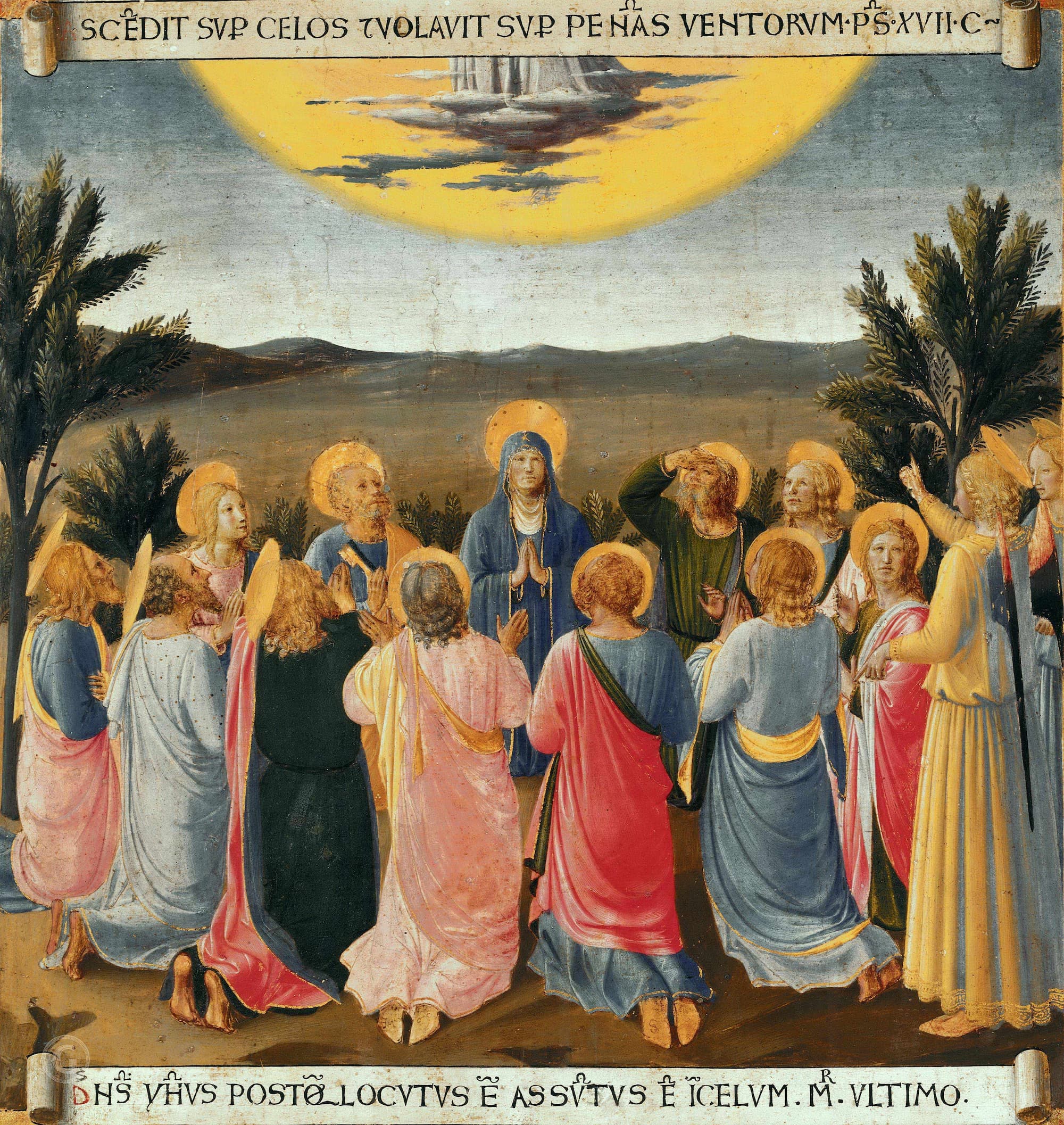
He ascended above the heavens and flew upon the wings of the winds.
Dominus Iesus, postquam locutus est, assumptus est in caelum.
The Lord Jesus, after he had spoken to them, was taken up into heaven.
From a sermon of Saint Leo the Great, Pope, on the Ascension of the Lord
Beloved, after the blessed and glorious Resurrection of our Lord Jesus Christ, whereby the true Godhead of Him who had been crucified and had risen again was confirmed, He remained for forty days with His disciples and by many proofs showed that He was truly alive. He spoke to them of the kingdom of God and strengthened their faith, lest they should think that what they saw in Him was only a spirit, and not truly the same body which had been born, had suffered, and had risen again.
Thereafter He was lifted up before their eyes above all the heavens, to share the glory of the Father. And that which until then had been visible in our Redeemer passed into the sacraments of the Church. Faith thereby became nobler and stronger; for henceforth the Son of God was no longer beheld with bodily eyes, but embraced by faith.
That this faith might be firm and steadfast, visible sight was taken away and a greater instruction was given. For human nature in Christ has been exalted above the dignity of every heavenly creature: it has ascended above the choirs of angels, has been lifted above the archangels and above all the powers of the heavenly spirits. It has found its place at the right hand of the eternal Father.
For the Ascension of Christ is our exaltation; and whither the glory of the Head has gone before, thither also the body is called in hope. Let us therefore, beloved, rejoice with worthy joy and be glad with holy thanksgiving. For today we are not only confirmed as possessors of paradise, but in Christ we have even entered into the highest heavens. By the ineffable grace of Christ we have received more than we had lost through the envy of the devil. For those whom the malicious enemy had driven from their first dwelling-place, the Son of God has joined to Himself and placed at the right hand of the Father, with whom He liveth and reigneth for ever and ever. Amen.
Viri Galilaei
The Holy Mass of the Ascension opens with the words of the angels to the Apostles, after Christ had been taken up into heaven before their eyes: Viri Galilaei, quid admiramini aspicientes in caelum? Ye men of Galilee, why stand you looking up to heaven?
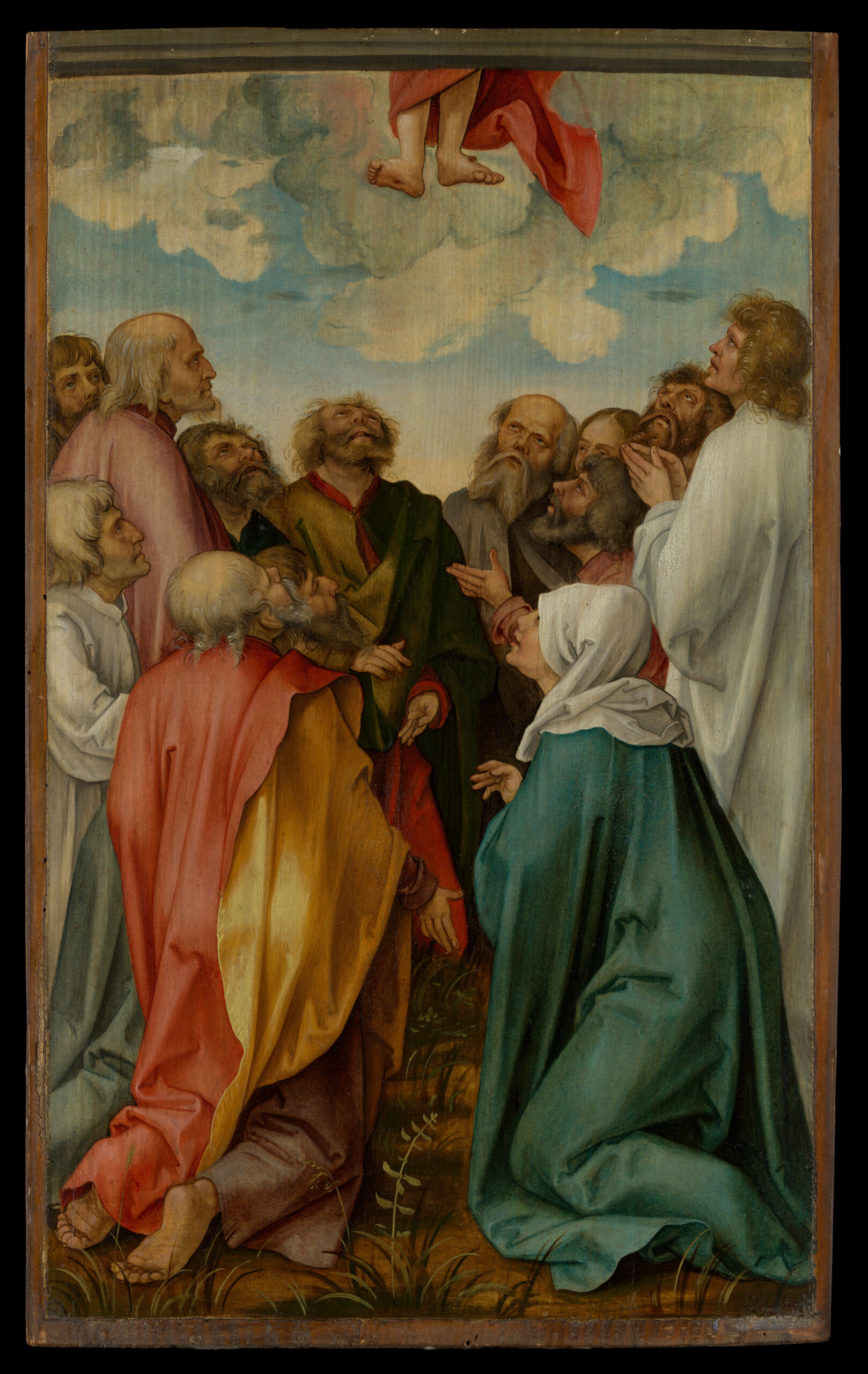
Ye men of Galilee, why stand you looking up to heaven?
In these words lies the passage from seeing to believing. The Apostles no longer behold their Lord with bodily eyes, yet they are not abandoned. He has ascended, as He had said; and He shall come again, as the angels proclaim. Thus the Introit of the Ascension is at once exalted and grave: the gaze is directed toward heaven, but the Apostles are also sent back to the mission of the Church.
Giovanni Pierluigi da Palestrina set this text to music in the motet Viri Galilaei. The music bears the words in clear and solemn elevation. The voices rise and answer one another, as though following the gaze of the Apostles: upward toward heaven, and at the same time toward the promise that the same Christ shall come again.
Viri Galilaei, quid admiramini aspicientes in caelum?
Hic Iesus, qui assumptus est a vobis in caelum, sic veniet, quemadmodum vidistis eum euntem in caelum.
Ye men of Galilee, why stand you looking up to heaven?
This Jesus who is taken up from you into heaven, shall so come, as you have seen him going into heaven.