Gospel of the Sunday (John 15:26–27; 16:1–4)
At that time Jesus said to His disciples: When the Paraclete cometh, whom I will send you from the Father, the Spirit of truth, who proceedeth from the Father, He shall give testimony of Me. Alleluia. And you shall give testimony, because you are with Me from the beginning. These things have I spoken to you, that you may not be scandalized. They will put you out of the synagogues; yea, the hour cometh, that whosoever killeth you will think that he doth a service to God. And these things will they do to you, because they have not known the Father, nor Me. But these things I have told you; that when the hour shall come, you may remember that I told you of them.
Dom Prosper Guéranger on the Gospel of the Sunday after the Ascension
Here we have our Jesus telling us the effects which the coming of the Holy Ghost will produce in our souls. These words were first addressed to the Apostles at the Last Supper. He told them that the Paraclete would give testimony of Him, that is, would instruct them upon His Divinity, and teach them to be faithful to Him, even so as to lay down their lives for Him. A few moments before His Ascension, Jesus again spoke to them concerning the Paraclete, and called Him the Power from on high.
Severe trials were awaiting these Apostles; they would have to resist unto blood. Who would be their support, for, of themselves, they were but weak men? The Holy Ghost, who was to abide with them. By Him they would conquer, and the Gospel would be preached to all nations. Now, this Spirit of the Father and Son is about to descend upon us; and what is the object of His visit, but that of arming us for the combat, and strengthening us against the attacks of our enemies?
As soon as this holy Season of Easter is over, and we no longer have the celebration of its grand mysteries to enlighten and cheer us, we shall find ourselves at the old work of battling with the three enemies: the devil, who is angered by the graces we have received; the world, to which we must, unfortunately, return; and our passions, which, after this calm, will again awaken and molest us. If we be endued with the Power from on high, we shall have nothing to fear. Let us, therefore, ardently desire to receive Him; let us prepare Him a worthy reception; let us use every endeavour to make Him abide with us; and we shall gain the victory, as did the Apostles.
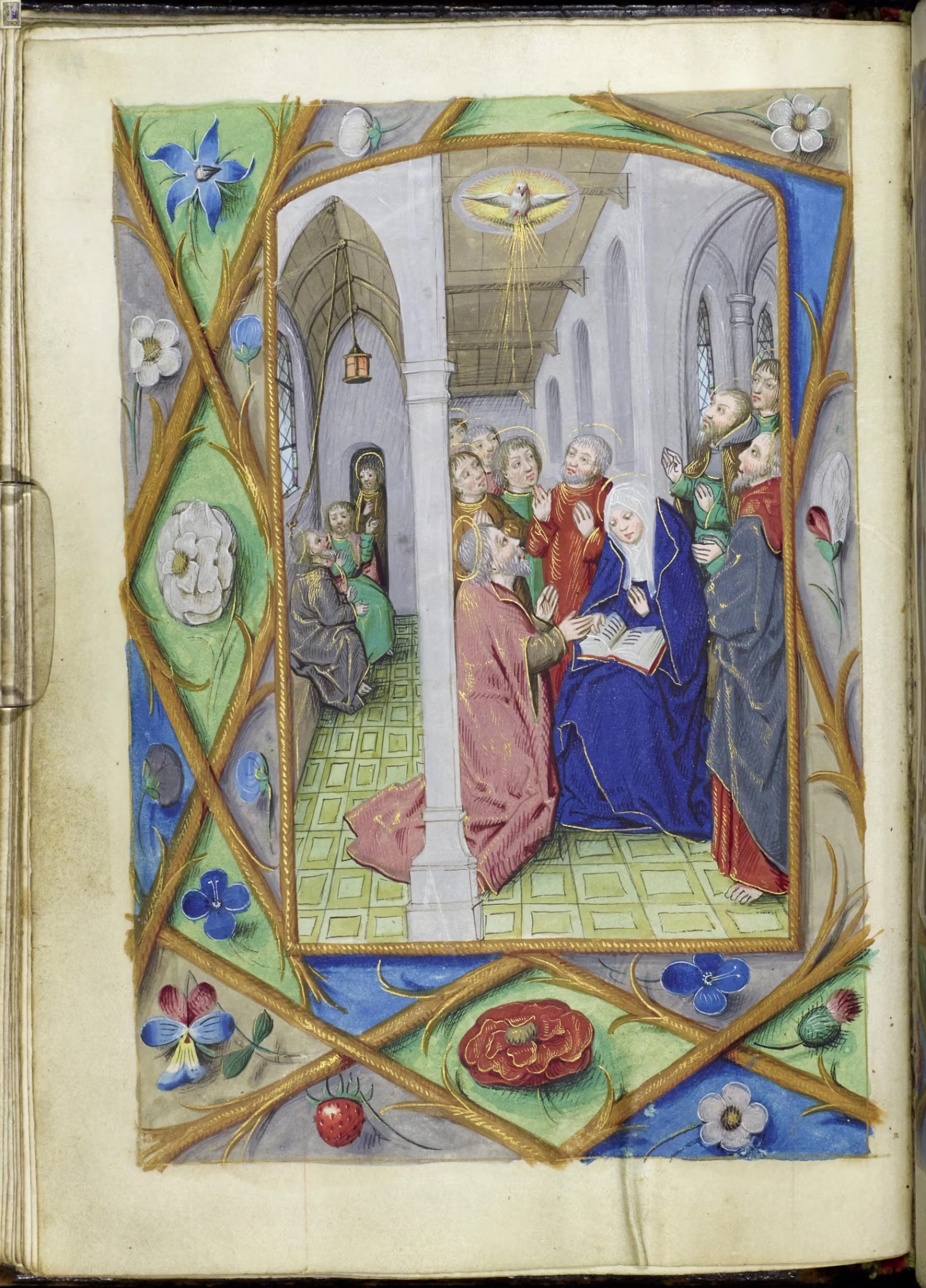
The Sunday of Roses
In the Middle Ages, the Sunday within the Octave of the Ascension was called the Sunday of Roses, in Latin Dominica de Rosis, because it was the custom to strew the pavement of the churches with roses, as a homage to Christ who ascended to heaven when earth was in the season of flowers.
How well the Christians of those times appreciated the harmony that God has set between the world of grace and nature. The Feast of the Ascension, when considered in its chief characteristic, is one of gladness and jubilation, and Spring’s loveliest days are made for its celebration.
Our forefathers had the spirit of the Church. They forgot, for a moment, the sadness of poor earth at losing her Emmanuel, and they remembered how He said to His Apostles: If ye loved Me, ye would be glad, because I go to My Father.
Let us do in like manner. Let us offer to Jesus the roses wherewith He has beautified our earth. Their beauty and fragrance should make us think of Him who made them, of Him who calls Himself the flower of the field and the lily of the valleys.
Nazareth means flower. This name, too, tells us what a charm and sweetness there is in Him whom we serve and love as our God. (Dom Guéranger)