Gospel of the Sunday (Luke 16:1–9)
AT THAT TIME Jesus spoke this parable to His disciples: There was a certain rich man who had a steward; and the same was accused unto him that he had wasted his goods. And he called him, and said unto him, How is it that I hear this of thee? Give an account of thy stewardship; for thou mayest be no longer steward. Then the steward said within himself, What shall I do? for my lord taketh away from me the stewardship: I cannot dig; to beg I am ashamed. I am resolved what to do, that, when I am put out of the stewardship, they may receive me into their houses. So he called every one of his lord’s debtors unto him, and said unto the first, How much owest thou unto my lord? And he said, An hundred measures of oil. And he said unto him, Take thy bill, and sit down quickly, and write fifty. Then said he to another, And how much owest thou? And he said, An hundred measures of wheat. And he said unto him, Take thy bill, and write fourscore. And the lord commended the unjust steward, because he had done wisely: for the children of this world are in their generation wiser than the children of light. And I say unto you, Make to yourselves friends of the mammon of unrighteousness; that, when ye fail, they may receive you into everlasting habitations.
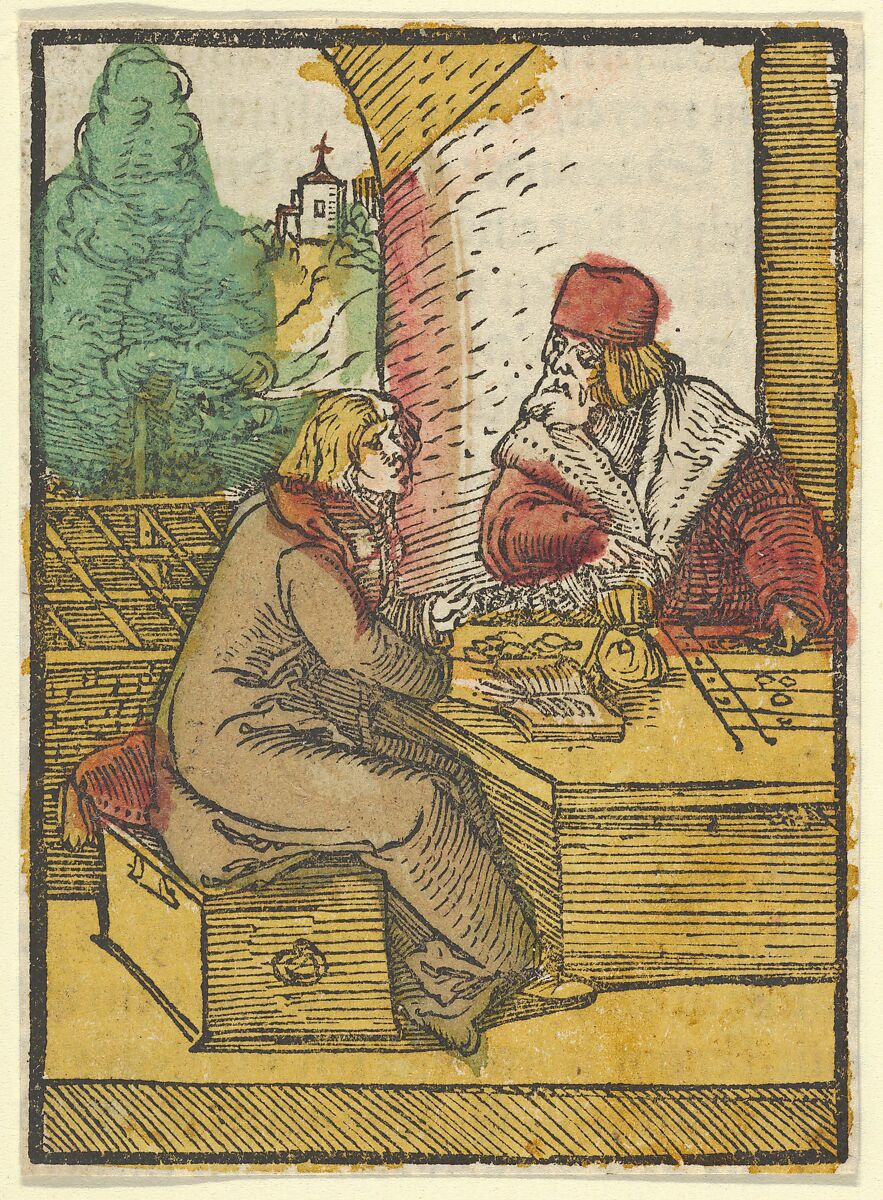
The Parable of the Unjust Steward
After rebuking the Pharisees in the three preceding parables for murmuring at the conversion of sinners, Christ now adds a new parable concerning the right use of earthly possessions. The Pharisees were unwilling not only to show mercy to the penitent, but also to relieve the poor. Therefore Christ teaches that riches are not given to be hoarded for ourselves, but to be faithfully administered for the glory of God and the good of our neighbour.
The rich man in the parable represents God. The steward signifies every man to whom God has entrusted His gifts. As a steward administers the property of his master, so man is appointed to administer all that he has received. St Ambrose and Theophylact therefore observe that we are not the true owners of our possessions, but only stewards of what belongs to Another.
Before men we may lawfully possess earthly goods as our own, but before God we are only their administrators. Whatever we possess has been entrusted to us for moderate use and that we may assist those in need. Therefore, on the Day of Judgment, every man will be required to render a strict account of his stewardship.
Everything we possess has been entrusted to us by God. We are not owners, but stewards.
St Paul teaches the same doctrine when he writes: Let a man so account of us, as of the ministers of Christ, and the dispensers of the mysteries of God. Here now it is required among the dispensers, that a man be found faithful. What is true of the Apostles is true in a certain measure of every Christian. Our understanding, wisdom, memory, eloquence, wealth, influence, and every other gift belong not to ourselves but to God. They are entrusted to us that they may be employed according to His holy will and for His glory.
St John Chrysostom warns us against imagining that we are absolute masters of our possessions. We are but travellers upon earth and stewards of another’s bounty. Therefore pride becomes us not, but the humility and fidelity of a steward who knows that one day he must give an account of everything committed to his care.
When the Lord says, Give an account of thy stewardship. Christ addresses these words ultimately to every man at the hour of death. Then God will require an account of our life, our possessions, and our talents. He will ask how we have lived, how we have employed His gifts, whether we have sought His glory, and whether we have laboured for the salvation of ourselves and of our neighbour.
St John Climacus relates that a monk, on the very first night after entering the monastery, dreamed that he was called to render an account of a heavy debt. The vision filled him with such holy fear that for many years he devoted himself with extraordinary fervour to obedience, mortification, and penance. After a time he was shown that part of his debt had been remitted, and after many more years of faithful perseverance he learned that it had been entirely forgiven. The same writer also tells of a holy abbot who, after a lifetime of fasting and prayer, seemed on the eve of death to stand before the divine Judge. Those around him heard him answering some accusations, confessing others, and imploring mercy. So terrible, says Climacus, is the judgment before which every man must one day appear.
“`html
The steward acknowledges the justice of the sentence pronounced against him. He knows that he has squandered his master’s goods and that his stewardship is at an end. He cannot labour, and he is ashamed to beg. In his distress he devises a plan by which he may still find friends to receive him after his dismissal. The Glossa observes that this teaches us how, after death, there remains no time to recover by penance the virtues that have been neglected, just as the foolish virgins found it too late to seek oil when the bridegroom had already come.
The master praises the steward not for his dishonesty, but for his prudence. He does not commend the fraud, but the foresight with which the steward, seeing his dismissal at hand, wisely provided for the future. Here lies the lesson of the parable. The children of this world frequently show greater zeal and foresight in securing temporal advantages than the children of light display in seeking eternal goods.
In earthly affairs men are often as keen-sighted as the lynx, yet in heavenly things as blind as the mole.
St Augustine therefore remarks that worldly men commonly take greater care for their temporal future than Christians do for their eternal salvation. The desire for earthly possessions is strong, while the longing for heavenly treasures is too often weak and languid. Christ therefore exhorts His disciples not to imitate the world’s injustice, but its diligence and provident care in seeking what endures for ever.
Christ sets the unjust steward before us, not because of his fraud, but because of his foresight. As he earnestly sought to provide for his future, so ought we with far greater earnestness to labour for that life which shall never end. The children of this world are often more eager in pursuing passing riches than the children of light in seeking everlasting blessedness. This, says St Augustine, is because the love of earthly things strongly impels fallen man, whereas the love of invisible things is weakened by the infirmity of the flesh and attachment to the world.
The parable is therefore directed especially against the covetousness of the Pharisees. Christ teaches that riches are not given that we may serve ourselves, but that we may glorify God and relieve the necessities of our neighbour. We are but stewards of God’s gifts and must one day render an account of all that has been committed to us. Thus the unjust steward is praised, not because he acted unjustly, but because he acted wisely.
St Augustine beautifully sums up the lesson. If this steward showed such prudence in providing for a temporal future, how much more diligently ought we to provide for eternity. And if an unjust steward received praise for his foresight, how much more pleasing to God will those be who, through works of mercy, benefit many without wronging anyone.
From this parable Lapide draws three principal lessons. First, we are only stewards of everything that God has bestowed upon us, whether wealth, health, understanding, or any other gift. Secondly, all these gifts must be employed for the glory of God and the welfare of our neighbour. Thirdly, on the Day of Judgment we shall be called to account not only for the evil we have done, but also for the good we have neglected to do.
Therefore Christ says: Make to yourselves friends of the mammon of unrighteousness. As the steward gained friends among his master’s debtors, so must we use our earthly possessions to benefit the poor, that they may one day receive us into everlasting habitations.
Lapide explains that the expression the mammon of unrighteousness does not mean that every possession has been unjustly acquired. Riches bear this name because they are so often amassed by injustice, because they are uncertain and deceitful, because they easily become an occasion of sin, and because worldly men esteem them above heavenly treasures. Earthly goods are therefore not to be loved for their own sake, but employed as instruments for serving God and exercising charity towards our neighbour.
St Augustine observes that Christ speaks as though He were saying: “You rich and covetous men have made riches your god. Yet know that this mammon is deceitful and passing away. Destroy this idol by sharing your wealth with the poor, and God will reward you with a treasure that shall never perish.”
When Christ says, that they may receive you into everlasting habitations, He refers to the poor who have become your friends through your charity. If they attain heavenly glory, their prayers and intercession will contribute to your salvation. And even should they fail to reach that blessedness, your alms remain pleasing to God, for whatever is given to the poor Christ Himself regards as given unto Him.
Here our Lord speaks especially of those poor who are rich in faith and virtue. Let not the wealthy imagine that they alone are benefactors. Rather, they themselves receive the greater benefit. They give perishable gold and receive in return an everlasting reward.
St Gregory the Great therefore teaches that alms are given not merely to relieve the wants of the poor, but as gifts bestowed upon those who shall one day receive us into the everlasting habitations. In a certain sense the poor are the gatekeepers of heaven, for to them Christ has said: Blessed are the poor in spirit: for theirs is the kingdom of heaven. Yet they receive no one by their own authority, but only through the mercy of God, who identifies Himself with the least of His brethren.
Theophylact likewise teaches that the everlasting habitations are prepared for the poor, that they may there receive those who, out of love for God, have generously bestowed upon them what had been entrusted to them only in stewardship.
St John Chrysostom therefore calls almsgiving the noblest of all arts. It builds no earthly dwelling, but prepares for the Christian an everlasting home in heaven.
Source: Cornelius a Lapide, Commentary on Luke 16:1–9, adapted from the traditional English translation.